Free US Shipping On Orders Over $49
Easy 30-Day Returns
Financing Available Through ![]()
$199.00
Availability: In stock.
Ships same day, or next business day.
-
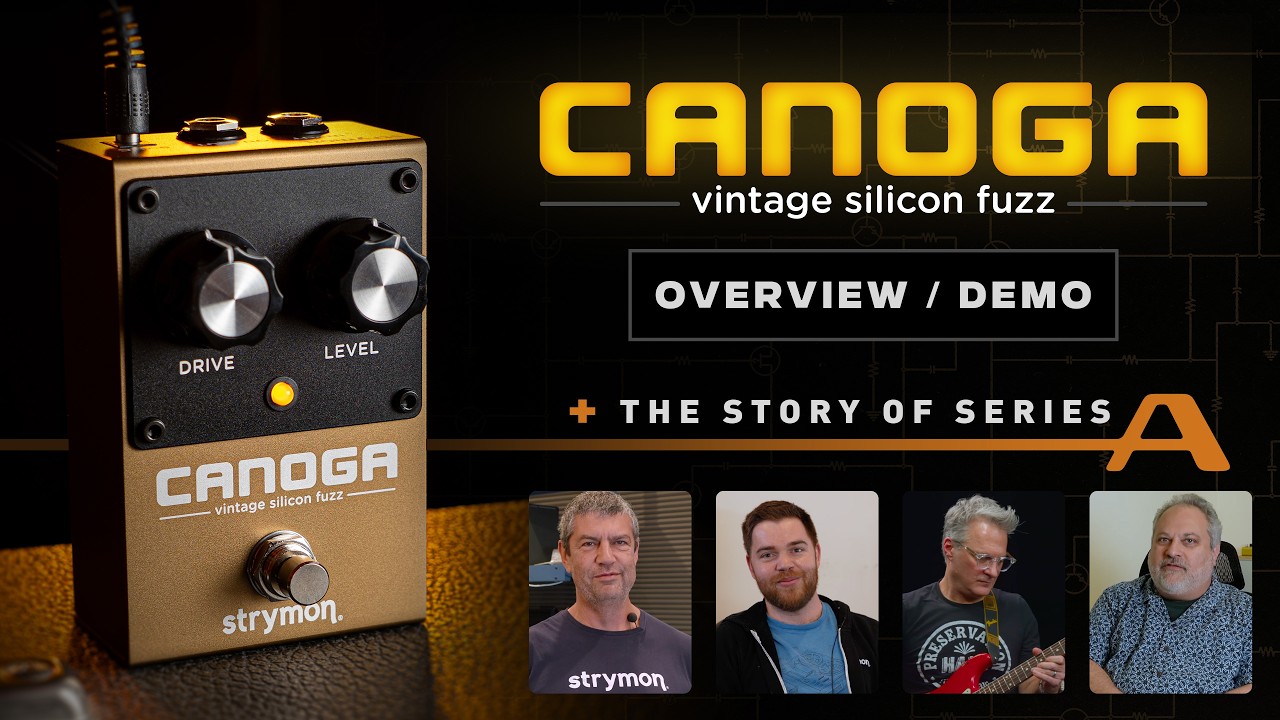
Sometimes simple wins. Ten years ago Strymon CEO and analog engineer Gregg Stock built a few custom fuzzes in an afternoon as a way of clearing his head, and they’ve been gathering dust on a shelf ever since. Unearthed seven years later when we needed a fuzz to pair with our UltraViolet vibe, that rediscovery became the catalyst for the creation of our new Series A line of all-analog pedals.
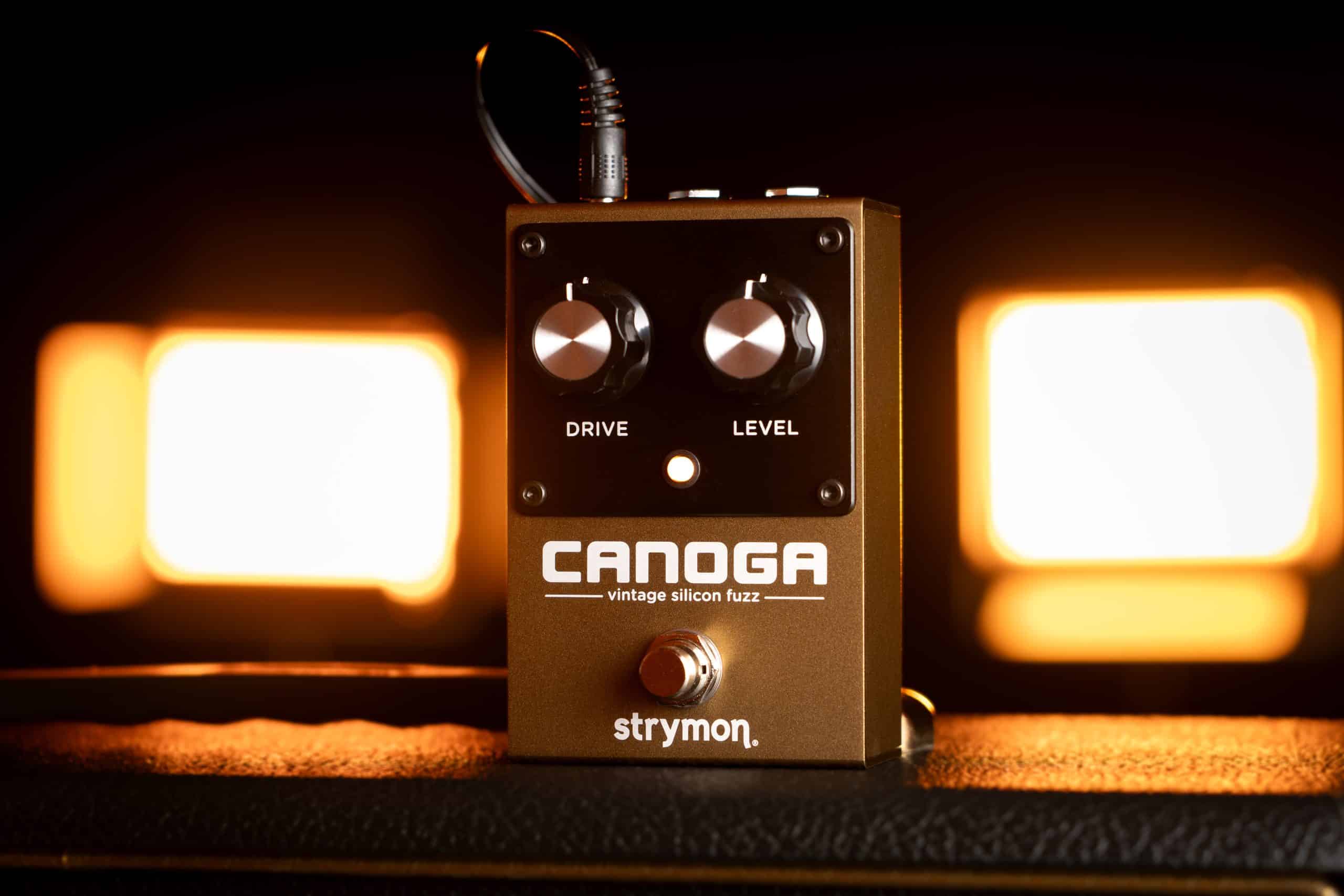
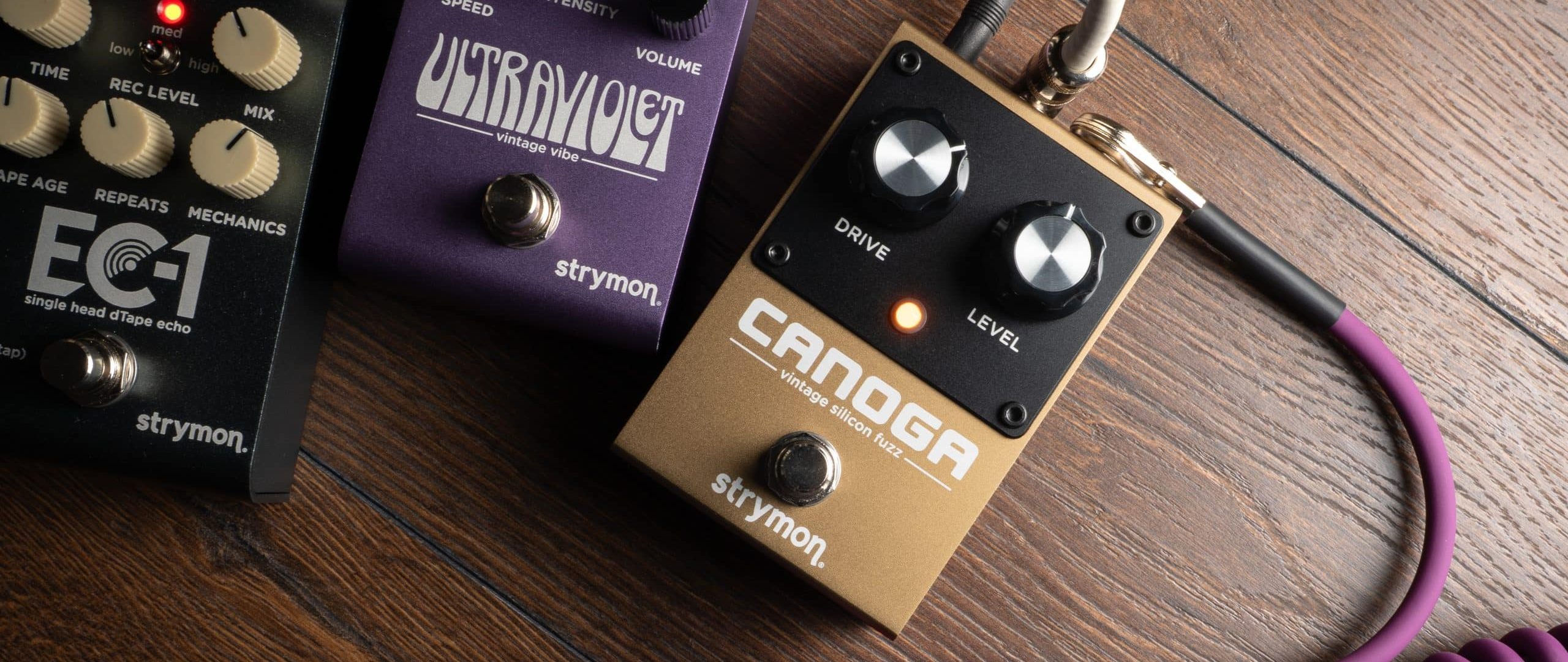
Now we’re pleased to announce the arrival of Canoga, a tweaked version of a vintage silicon FuzzFace® based upon one of Gregg’s original three fuzz designs. Full up it works as a fuzz or distortion, but if you back the guitar’s volume down there’s a world of varied tones on tap for all different styles of music.
Canoga is a simple pedal to use – there’s one knob for Drive and one for output Level – but the interaction between the guitar and Canoga’s input is critical, as is the interaction between it and your amp.
As with many fuzz pedals, Canoga works brilliantly plugged into an amp with a bit of hair on the tone already, similar to how Jimi Hendrix and other guitar greats of the 60s and 70s ran their rigs.
Additional versatility comes from the interaction between your guitar’s volume knob and the pedal’s input.
Traditionally, unbuffered fuzz pedals like to be connected directly to your guitar, so that the circuitry can “see” your guitar’s pickups and volume pot. Full up on both of Canoga’s pots and your guitar volume pot gets you the full fuzz experience, and rolling back the volume on the guitar opens up a new world of semi-clean blues, rock, Americana and pop sounds.
The rolled back sound stays clear in the high frequencies and doesn’t get muddy, so you might find that Canoga allows you to convincingly play riffs that you would normally employ a distortion pedal for, not a fuzz.

Killer code only sounds killer when it’s hosted inside of an ideal analog environment, and even though we’re primarily known for our DSP prowess, our stuff wouldn’t sound the way that it does without our strong analog team.
The analog guys are always coming up with interesting designs, so we’ve launched the ‘Series A’ line of pure analog pedals to give them an outlet, with Canoga being the second in the line, alongside Fairfax.
The designs you’ll be seeing in ‘Series A’ are intended to offer something different from traditional Strymon offerings, with no MIDI, USB, firmware or digital processing. These will be pedals that are unabashedly analog, which means it could get really interesting! Keep an eye out for more ‘Series A’ pedals as we go forward.
A vintage style Strat® was used, switching between the neck and bridge pickups. The DIG plugin was added in the middle section to create space.
A vintage Tele® tuned to Drop C was used, switching between the middle lipstick and bridge pickups. The DIG plugin was added in the middle section to create space.
A semi-hollow Tele®-style guitar with humbuckers was used, switching between the bridge and neck pickups. The DIG plugin was added in the middle section to create space.
A semi-hollow Tele®-style guitar with humbuckers was used, played with a glass slide on the bridge pickup. The El Capistan plugin is used throughout for vintage tape slap.
A semi-hollow Tele®-style guitar was used, switching between neck single coil and neck humbucker pickup settings.
A Strat®-style guitar tuned to Drop D was used, switching between the neck and bridge pickups.
A Danolectro® U2 guitar with lipstick pickups was used, switching between the neck pickup turned down and the bridge pickup turned all the way up.
A Danolectro® baritone guitar was used, switching between the lipstick bridge single coil and bridge humbucker settings. The DIG plugin was added in the middle section to create a sense of space.
A semi-hollow guitar with powerful (and microphonic) pickups was used, switching between the neck humbucker full up and the bridge humbucker turned down. The DIG plugin was added in the middle section to create a sense of space.
A vintage-style Strat was used, switching from the fourth pickup position to the bridge.
A vintage-style Strat was used, switching between the neck and middle pickup positions. The UltraViolet vibe was used in the B section breakdowns to add modulation.
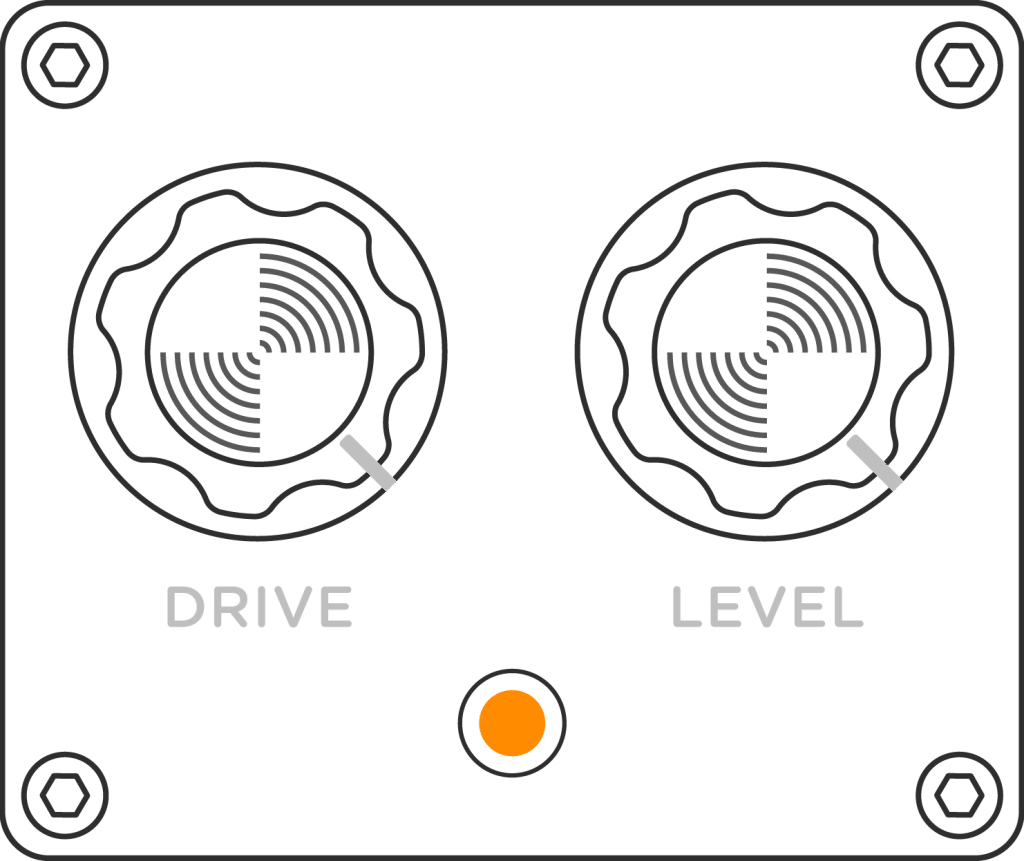
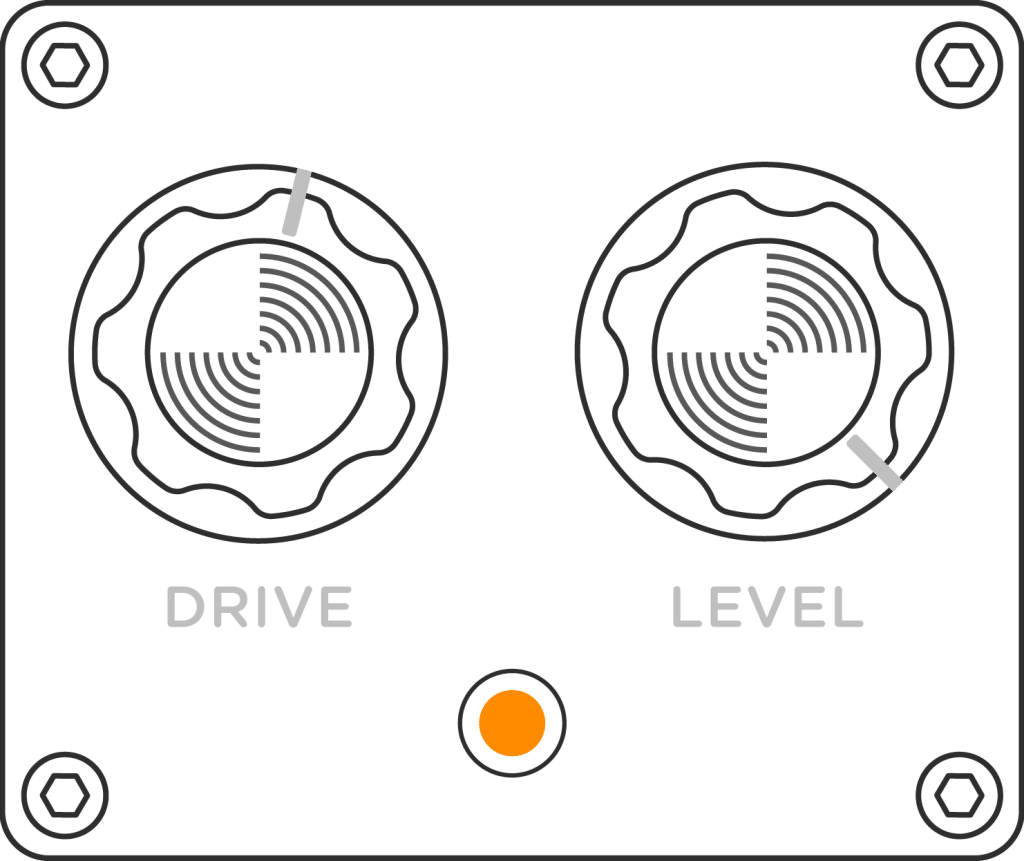
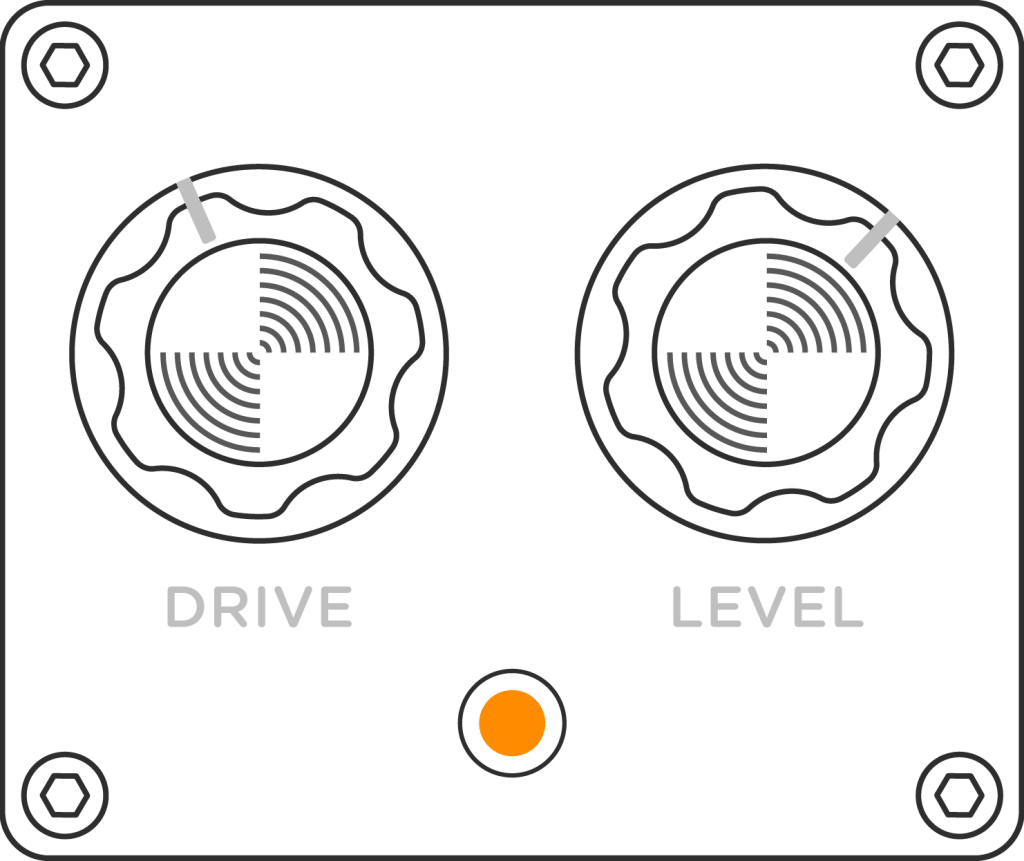
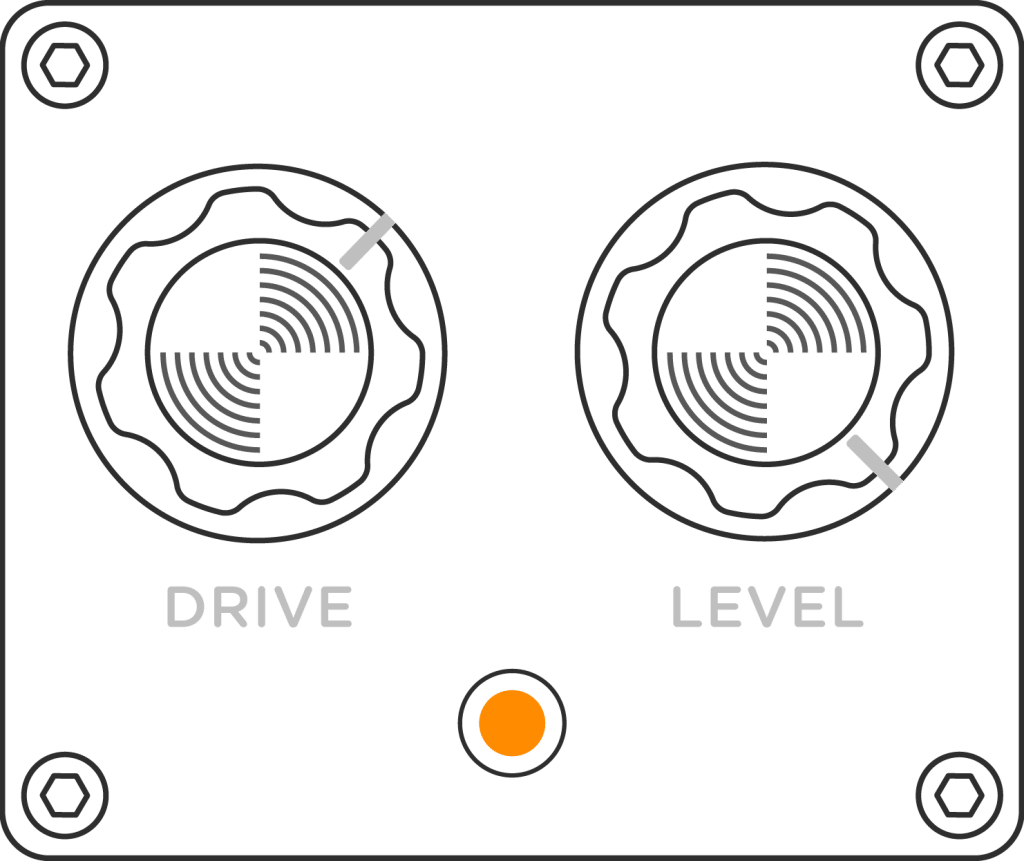
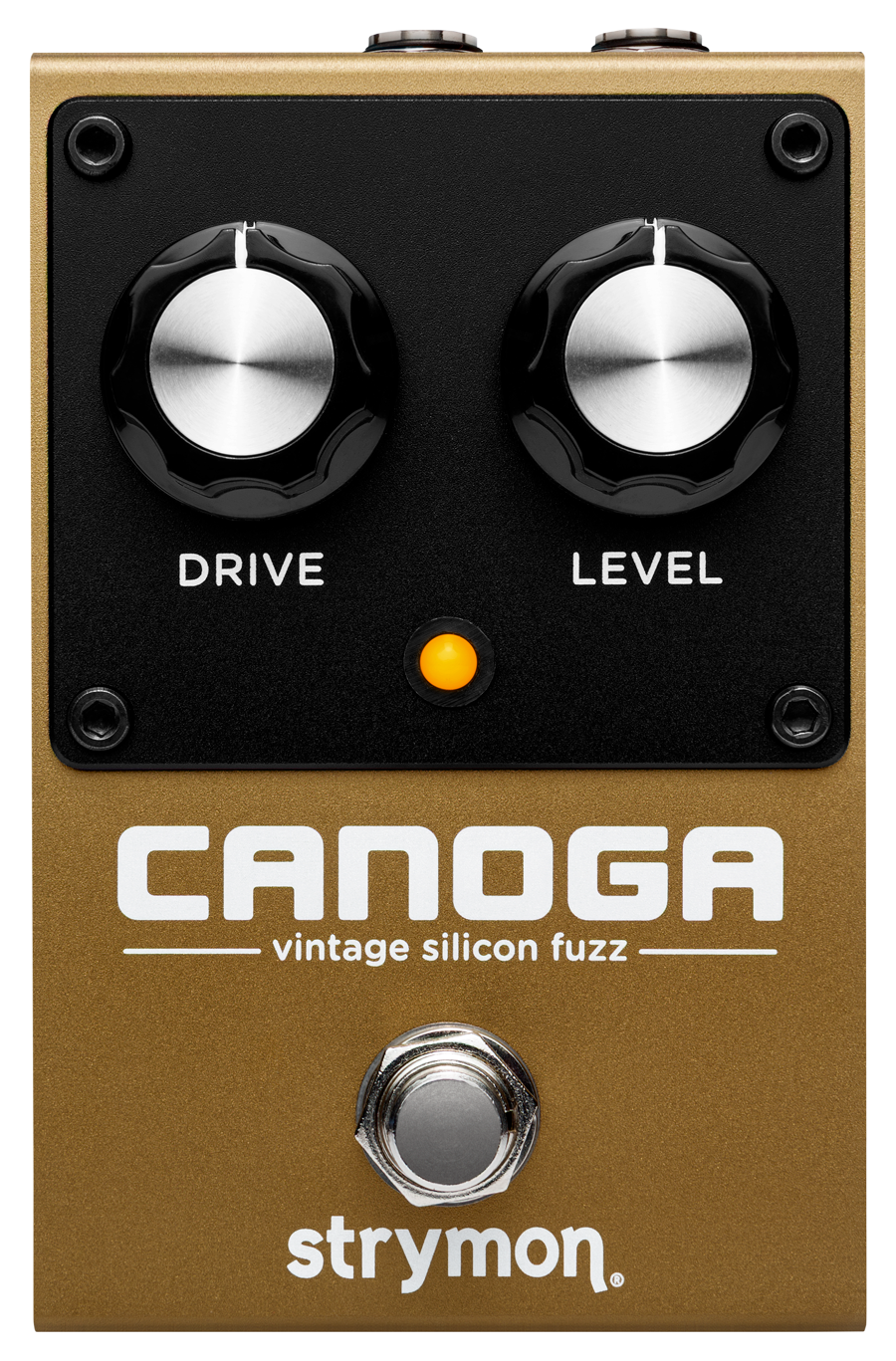
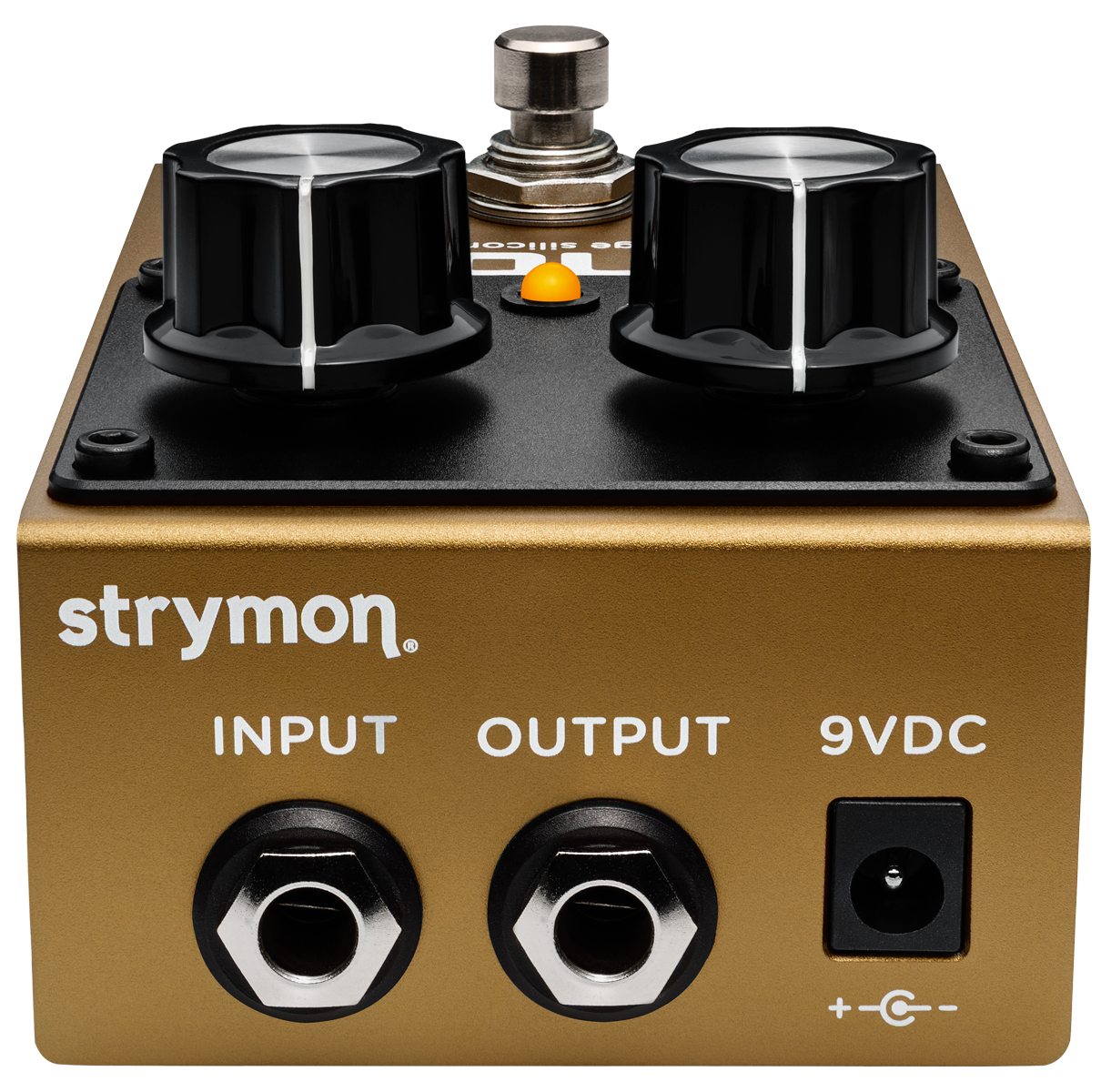
Use the interactive dots (+) to learn more about Canoga’s knobs, switches, and inputs/outputs.
DRIVE
Adjusts the amount of distortion, from light edge-of-breakup, to moderate crunch, to massively saturated fuzz.
LEVEL
Adjusts the output level when the pedal is engaged. A substantial gain increase is available for a lead boost or to drive your other pedals and amp harder.
FOOTSWITCH
Engages and bypasses the pedal. A lit amber LED indicates the pedal is engaged. Bypass is True bypass.
INPUT
Unbuffered, low impedance mono instrument input. Position Canoga as the first pedal in your signal chain for most effective interaction with your guitar’s pickups.
OUTPUT
High impedance mono output. High output impedance captures the interaction and unique sonic character of vintage fuzz pedals.
9VDC
Use a power supply or an adapter with the following rating: 9VDC, center negative, 50mA minimum (sold separately).
IMPORTANT! Voltages higher than 9VDC can damage the pedal.