Free US Shipping On Orders Over $49
Easy 30-Day Returns
Financing Available Through ![]()
$199.00
Availability: In stock.
Ships same day, or next business day.
-
Fairfax isn’t really a distortion pedal. Instead, it’s a complete miniature amplifier in 100% analog form, based upon a little-known device from the 60’s that powered a number of classic rock anthems.
The sound and feel is extremely tube-like, with added harmonics and saturation coming from a clever circuit that emulates the critical behavior of a tube amp’s output transformer. It’s a drive pedal that feels completely natural to play, retains the natural sound of your guitar, and glues notes together in a truly organic way.
Fairfax began as an engineering experiment, initially inspired by the original Garnet Amplifiers Herzog® tube drive unit designed for Randy Bachman in 1965. Our analog guys decided to try and recreate all of the critical elements of a custom Champ-like tube amp circuit fully in the analog domain, but small enough to fit into a pedal enclosure (so it couldn’t use real tubes or an output transformer).
The final design features a cleverly miniaturized tube preamp, Class A power amp and an ingenious custom circuit that emulates the saturation characteristics of the output transformer (which is absolutely vital to get the sound right).
There’s even a variable Sag circuit that behaves just like a real tube amp does. At low Sag values the behavior is mild and only slightly compressed, and at max values the JFETs can go crazy and unbias — which gates the signal — leading to spitting and chortling sounds more commonly associated with fuzzes.
In order for Fairfax to behave like a real amplifier it needed a massive amount of operating voltage, so a transformer-based power supply converts the 9VDC input voltage to 40V internally. This gives Fairfax the power that it needs for high headroom and amp-like feel, allowing for a wide range of tones.
At lower Gain settings Fairfax can be sweet, gently pushing the input to your amp with additional harmonic richness, a touch of saturation and a flat frequency response. At higher Gain levels the sound becomes fully saturated, and that large range of gain on tap allows Fairfax to be used in nearly any setup imaginable.
Killer code only sounds killer when it’s hosted inside of an ideal analog environment, and even though we’re primarily known for our DSP prowess, our stuff wouldn’t sound the way that it does without our strong analog team.
The analog guys are always coming up with interesting designs, so we’ve launched the ‘Series A’ line of pure analog pedals to give them an outlet, with Fairfax being the first in the line.
The designs you’ll be seeing in ‘Series A’ are intended to offer something different from traditional Strymon offerings, with no MIDI, USB, firmware or digital processing. These will be pedals that are unabashedly analog, which means it could get really interesting! Keep an eye out for more ‘Series A’ pedals as we go forward.
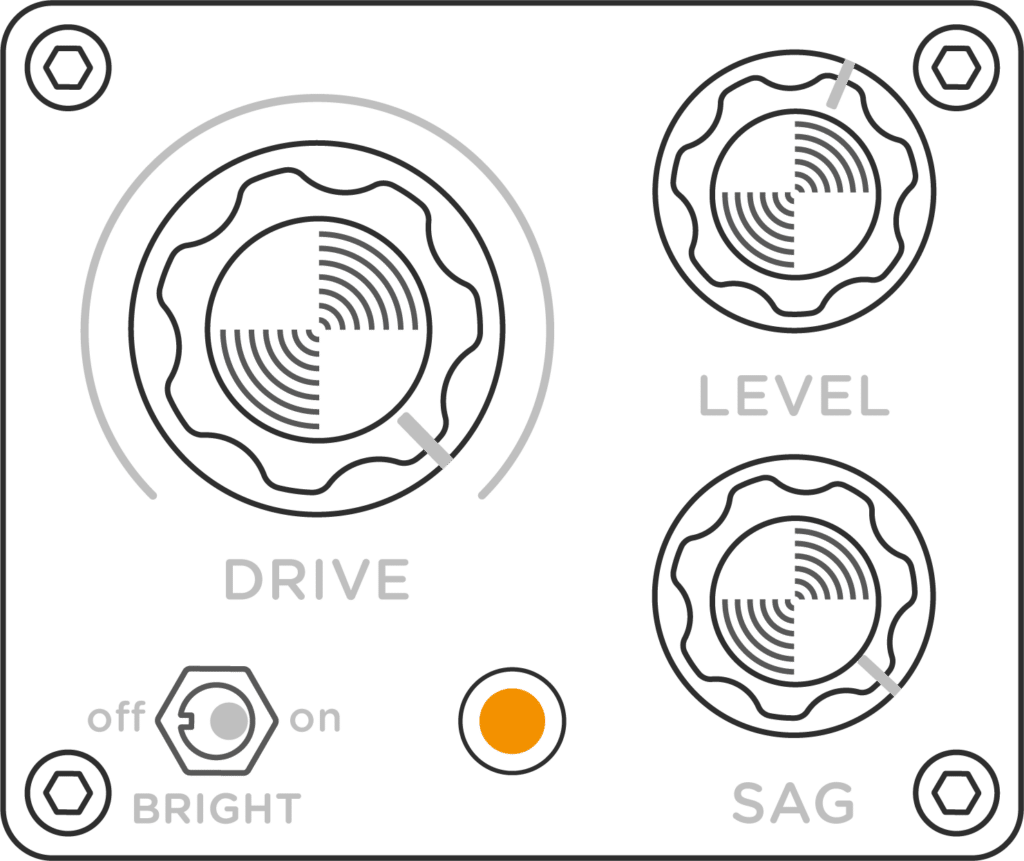
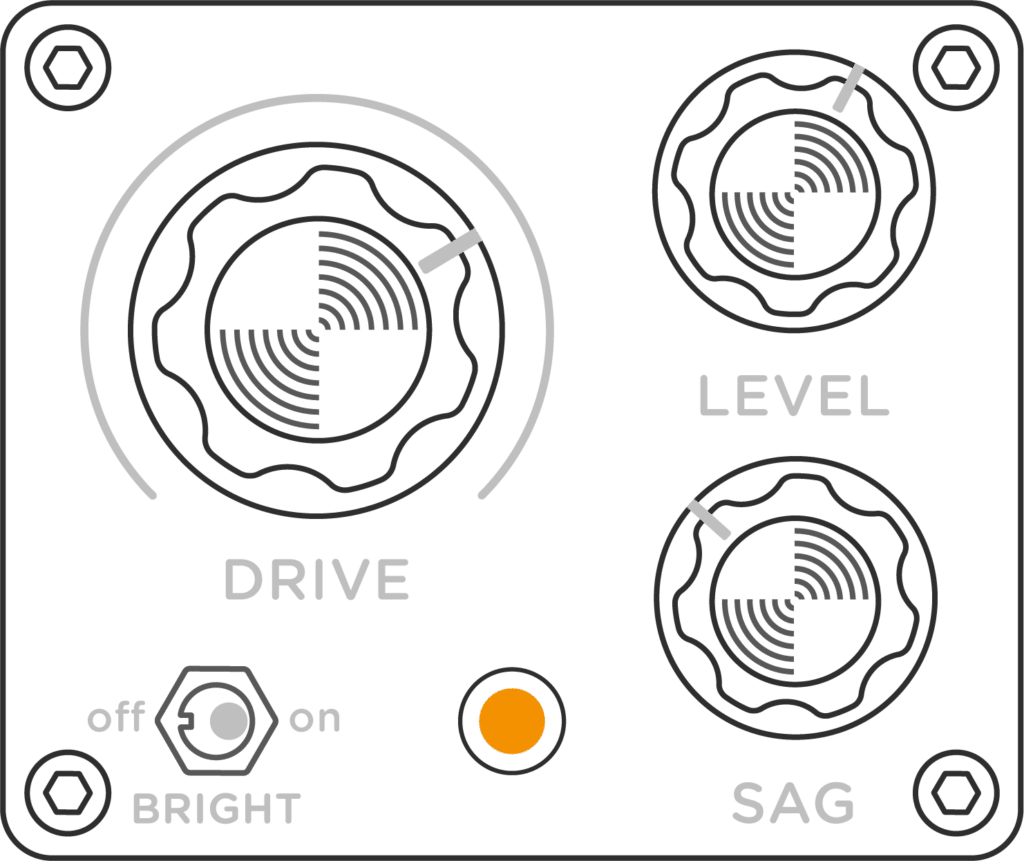
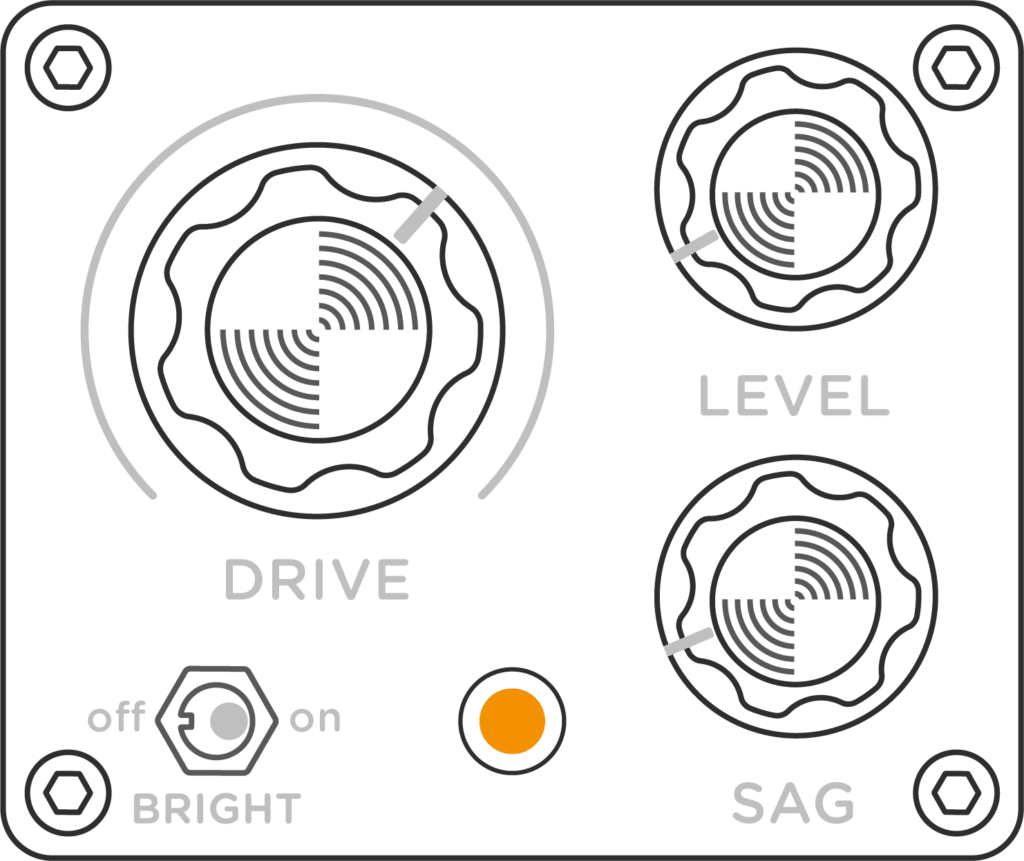
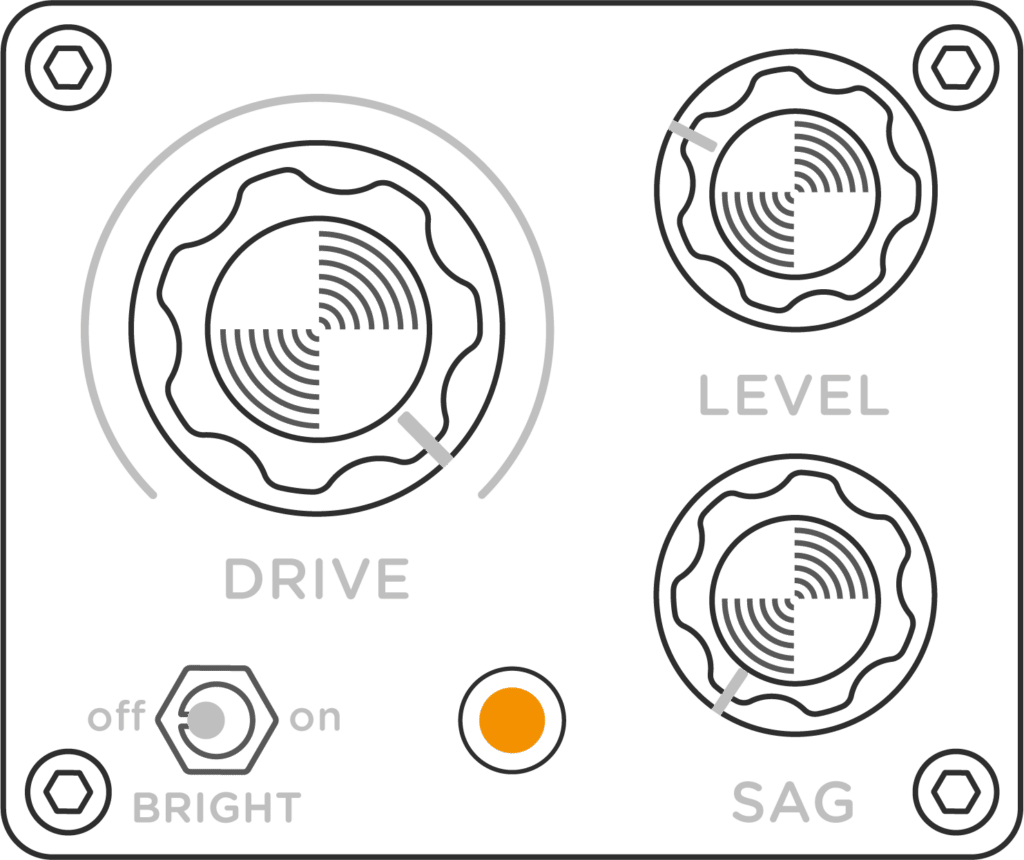
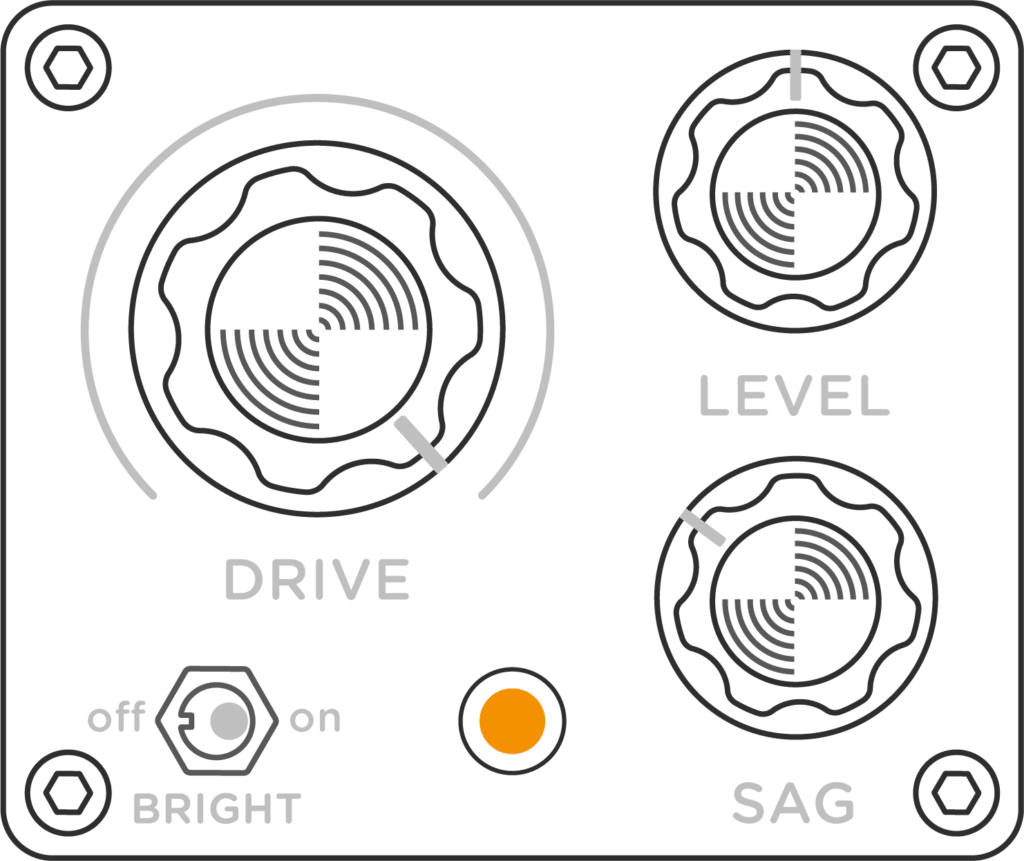
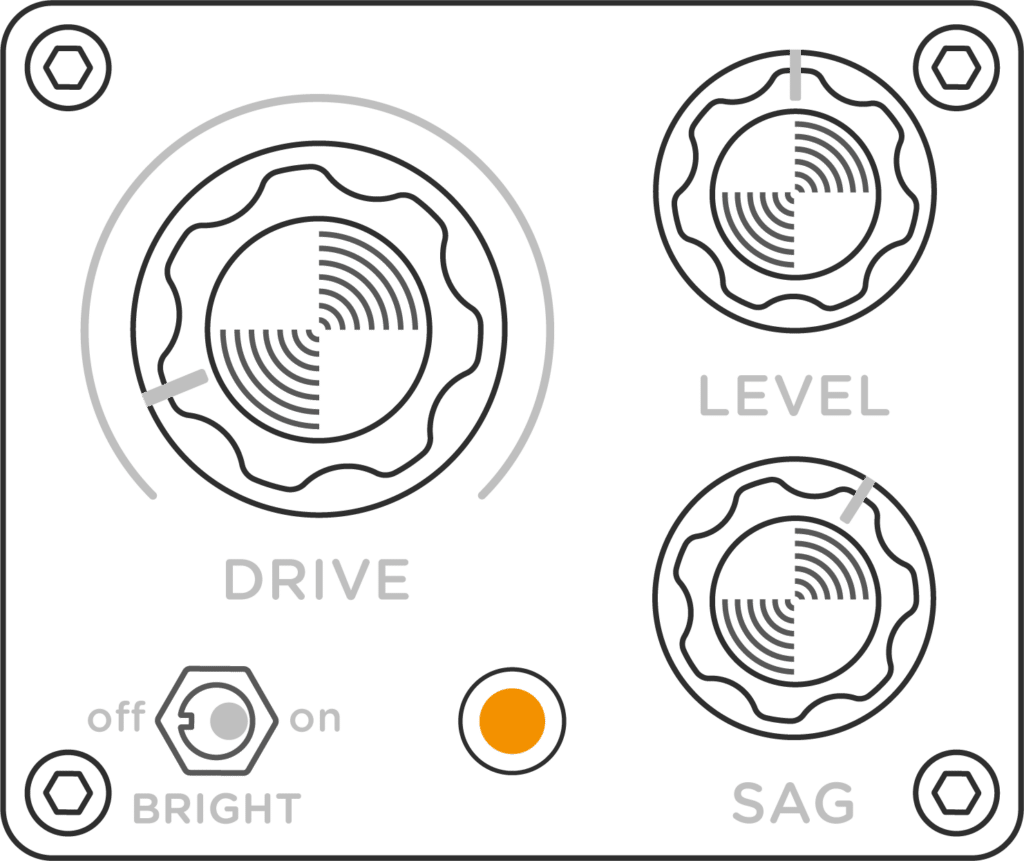
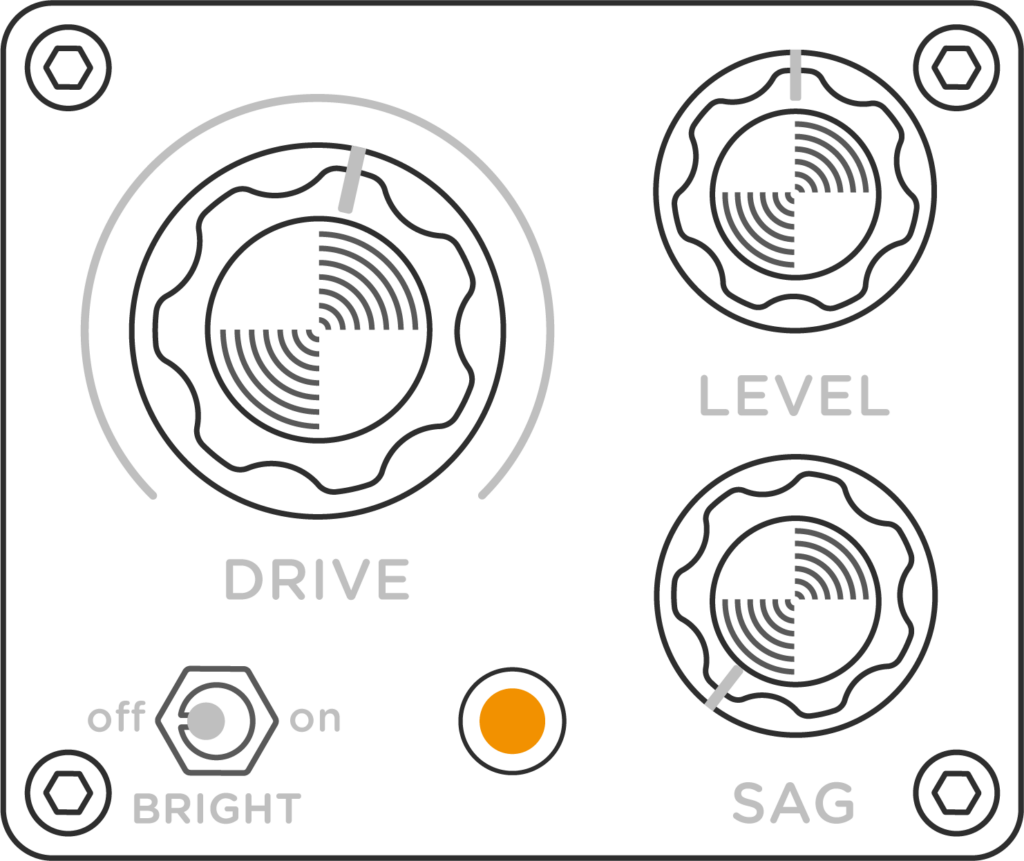
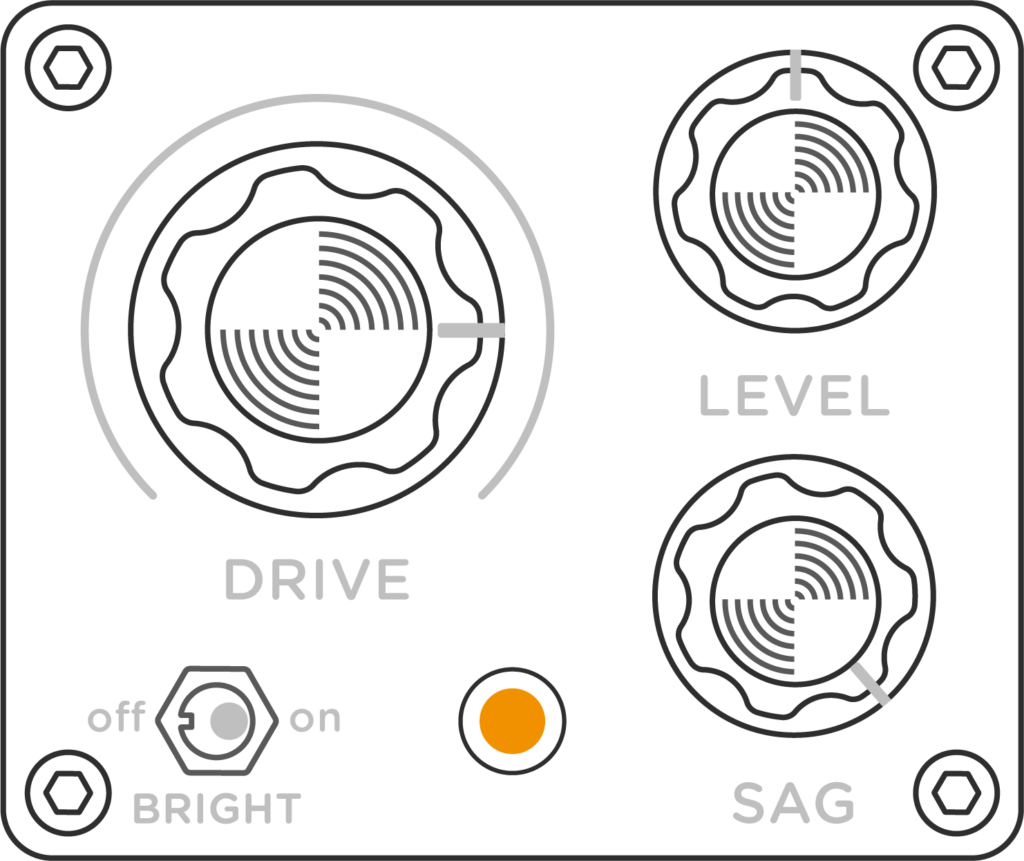
A softer, but still tight, bright, and pronounced overdrive setting works with a telecaster to create a very convincing 2000’s British Rock sound.
Slightly dark, gainy 90’s alternative rock tone that retains clarity, note definition and and amp-like response. Olivera set to a low mix adds some light space and movement.
Flint Harmonic Tremolo pushes Fairfax in and out of Class A saturation.
A gainy Fairfax is pushed by a Green Ringer-style octave pedal creating thick, complex and velcro-like Drop-D power chords and lead melody lines.
The Bright switch and a good amount of Drive and Level push the amp into 60s early metal territory.
Higher Drive and Level settings create a pop rock lead sound.
A Compadre-boosted dry guitar signal pushes Fairfax into the fires of Mount Doom for a massive metal tone that retains clarity while capturing the explosiveness of a cranked amplifier.
The Sag knob at Max and a good amount of Drive and Level create rootsy sputtering chaos.
Maximum Sag and Gain fight it out as low-tuned guitar pushes and pulls the Fairfax languidly between heavy fuzz and gating.
A dirty and loud setting paired with a bit of Sag is pushed by an analog sub octave for massive velcro-like single note rhythm tones.
Close harmony fingerpicking and steady bass interact through Class A tube and transformer saturation while Olivera provides a washy atmosphere.
With the Level control set to give only a little push to the somewhat dirty amp, Fairfax’s maxed Drive setting results in a saturated bridge humbucker signal, while the Bright switch in the off position assures a smooth top end.
Fairfax uses the input signal from a Jazzmaster and an El Capistan to create a heavy and texturally rich fuzz sound, perfect for staring directly at the floor and becoming one with your pedalboard.
Transformer saturation dynamically removes lows for focused yet overblown garage psych.
Medium Drive and Level give the neck pickup a fat boost for double stops.
Low Drive and a medium Output Level push the amp into pop Americana territory.
Dark and brooding in this example, Fairfax toes the line between fuzz and overdrive, creating the perfect rhythm sound for any midwest emo enthusiasts.
Swampy fingerpicking and hot 80’s pickup push Fairfax to sag, sputter, and bloom.
Fairfax at maximum gain adds weight and grunge to the single coils, fattening and dirtying up the low end while allowing the bite of the pickups to shine through.
With high DRIVE and fully maxed SAG settings into a slightly overdriven Princeton, Fairfax hits the spring reverb tank with a wave of sputtery gain for that fuzzy garage punk sound.
Fairfax is pushed by a Green Ringer-style octave up pedal resulting in angry, explosive chords and searing single note tones.
Because it’s based upon a tube amp design, Fairfax plays well with all different types of amplifiers and amp modelers. The creamy sustain brings something new to both clean and naturally dirty amplifiers.
We’ve even included an internal jumper that determines the power up state, so if you plan on using Fairfax with a pedal loop switcher or rack drawer system you can choose to have it turn on automatically when powered up, which is a lifesaver on a dark stage or with a complex setup.
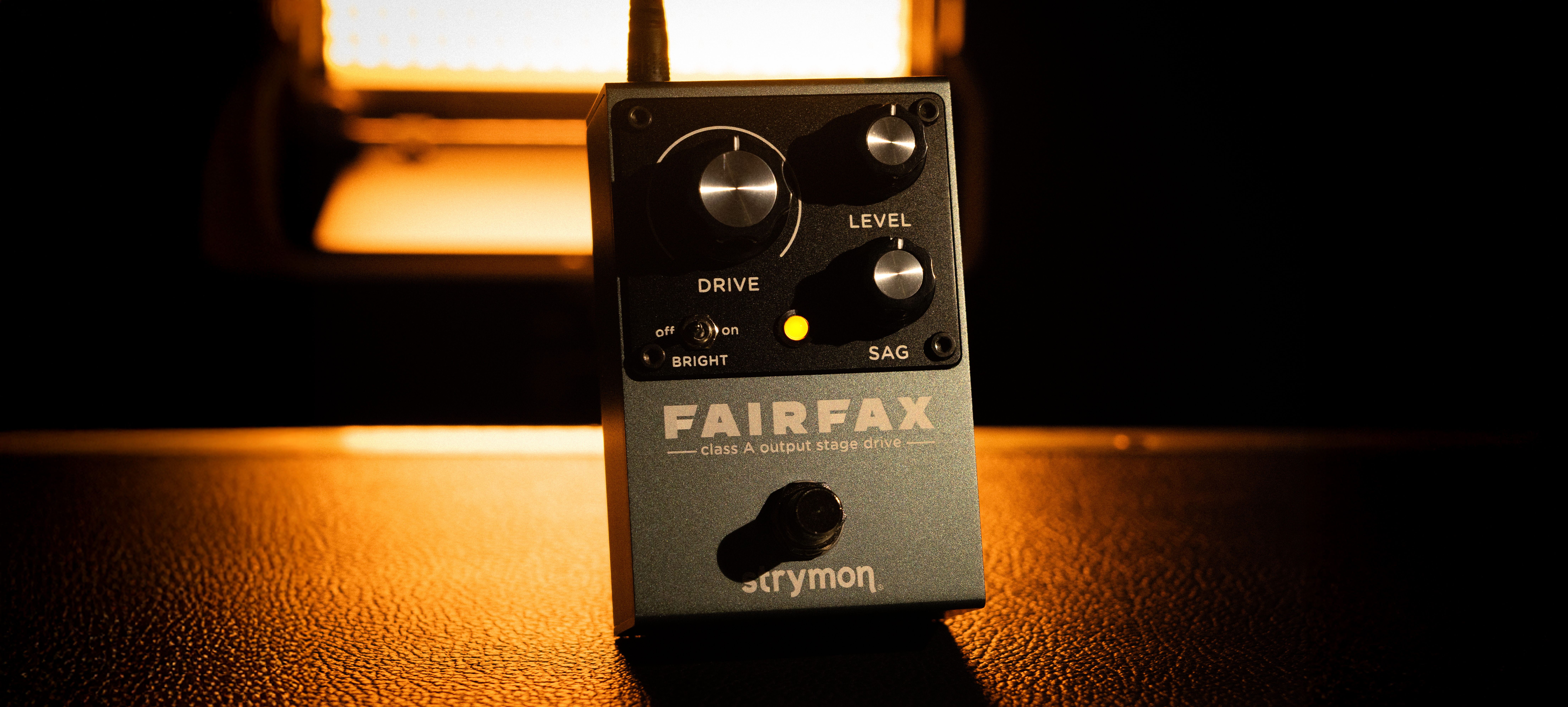
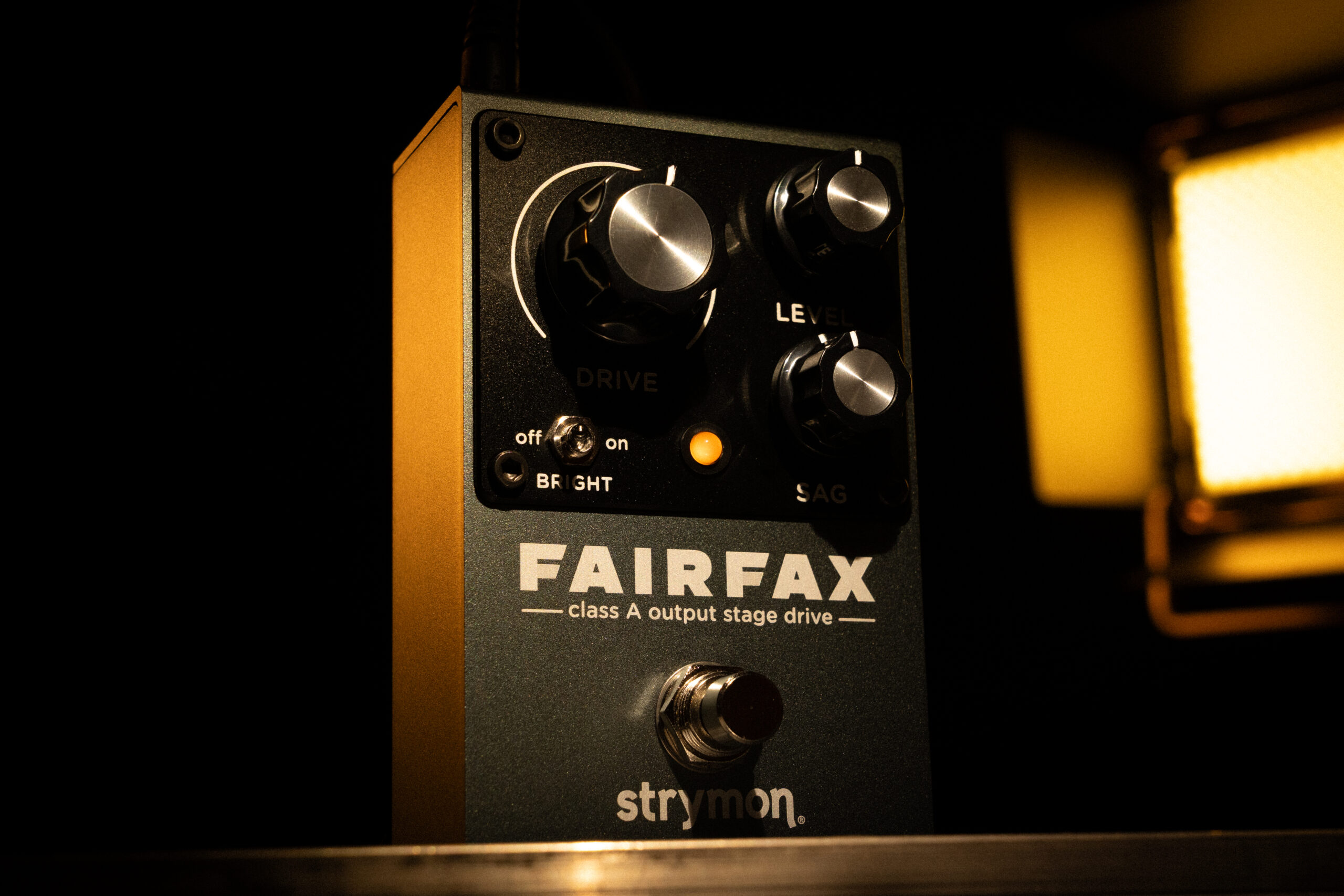
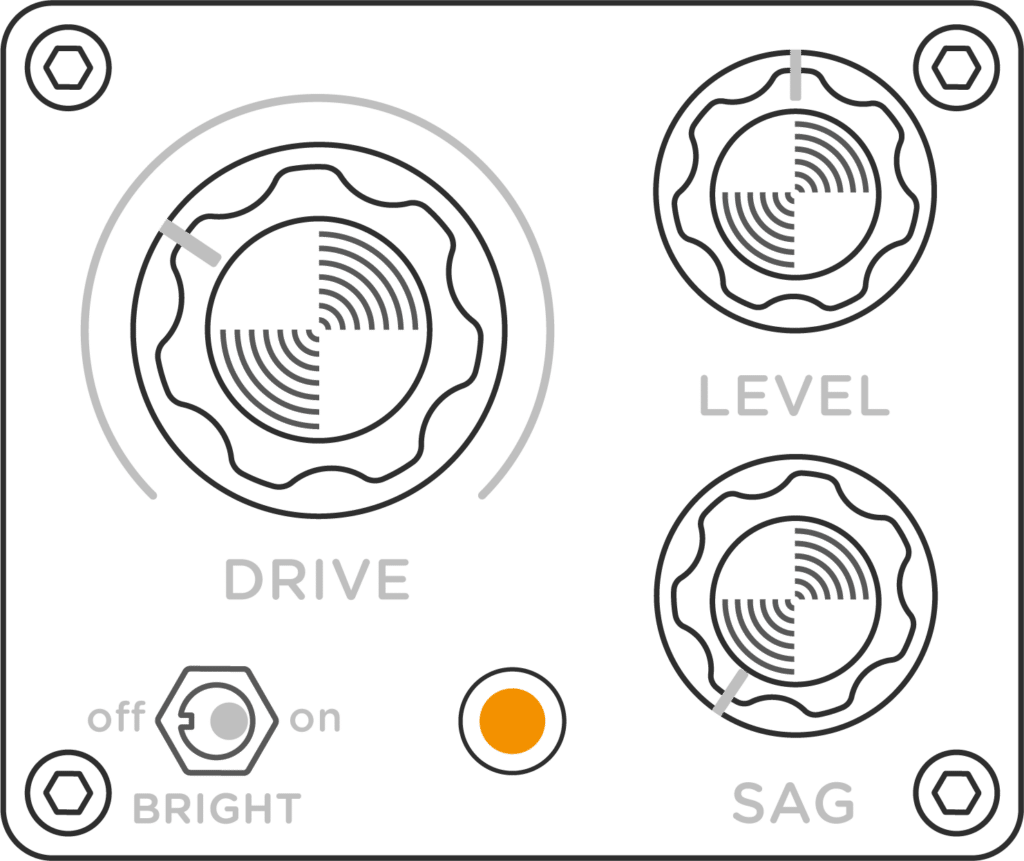
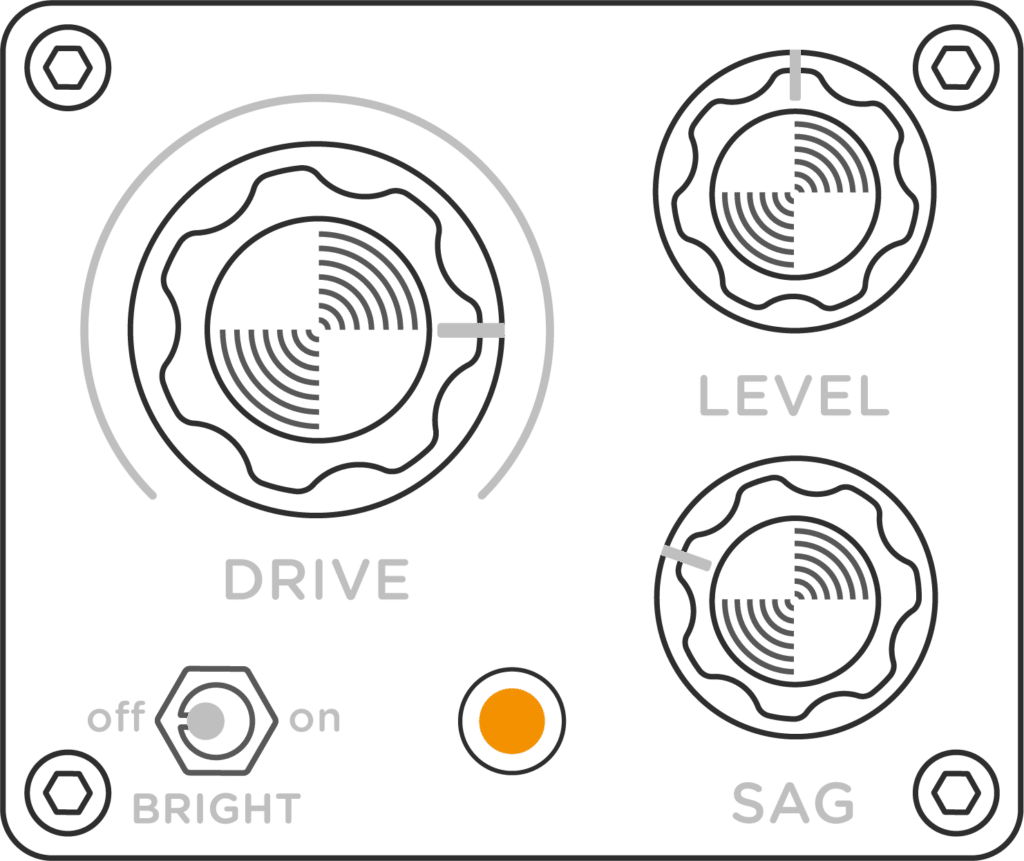
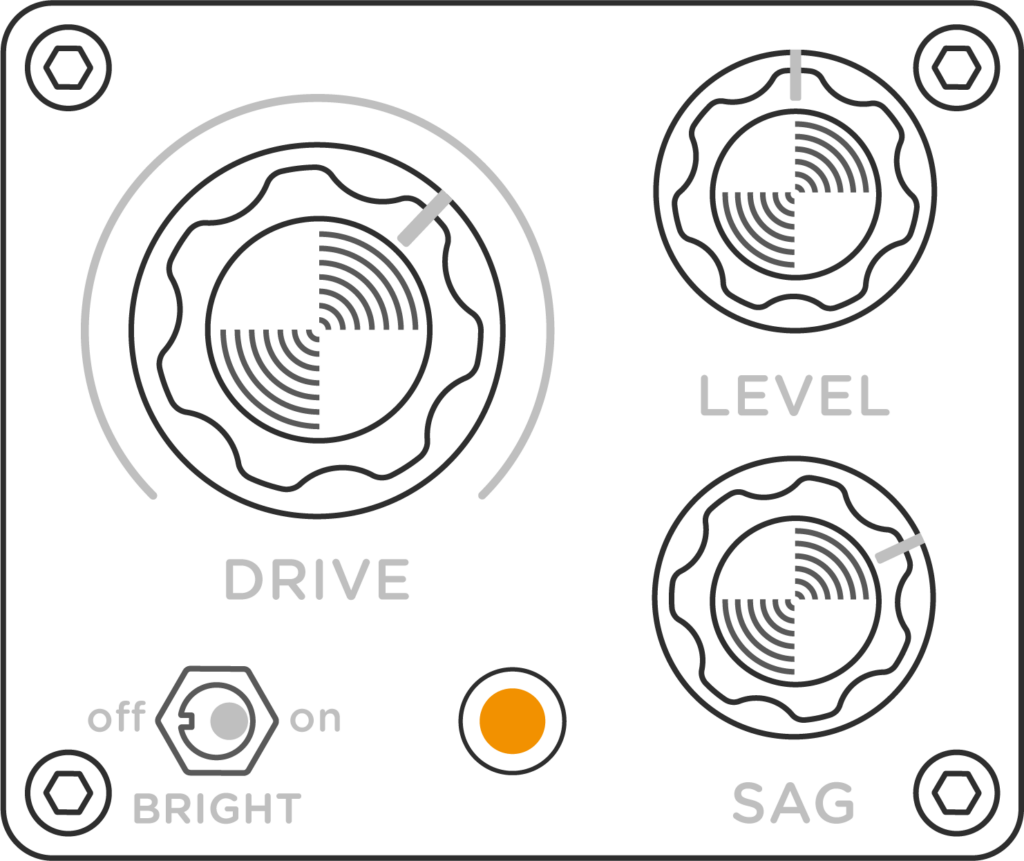
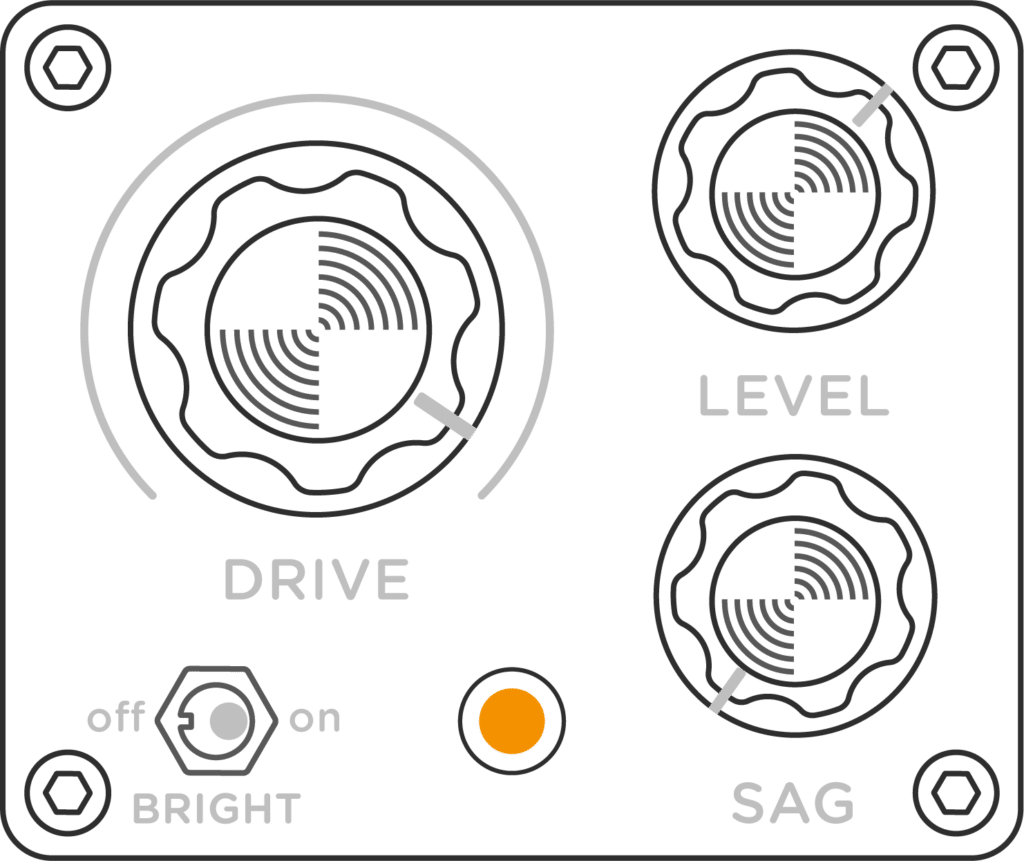
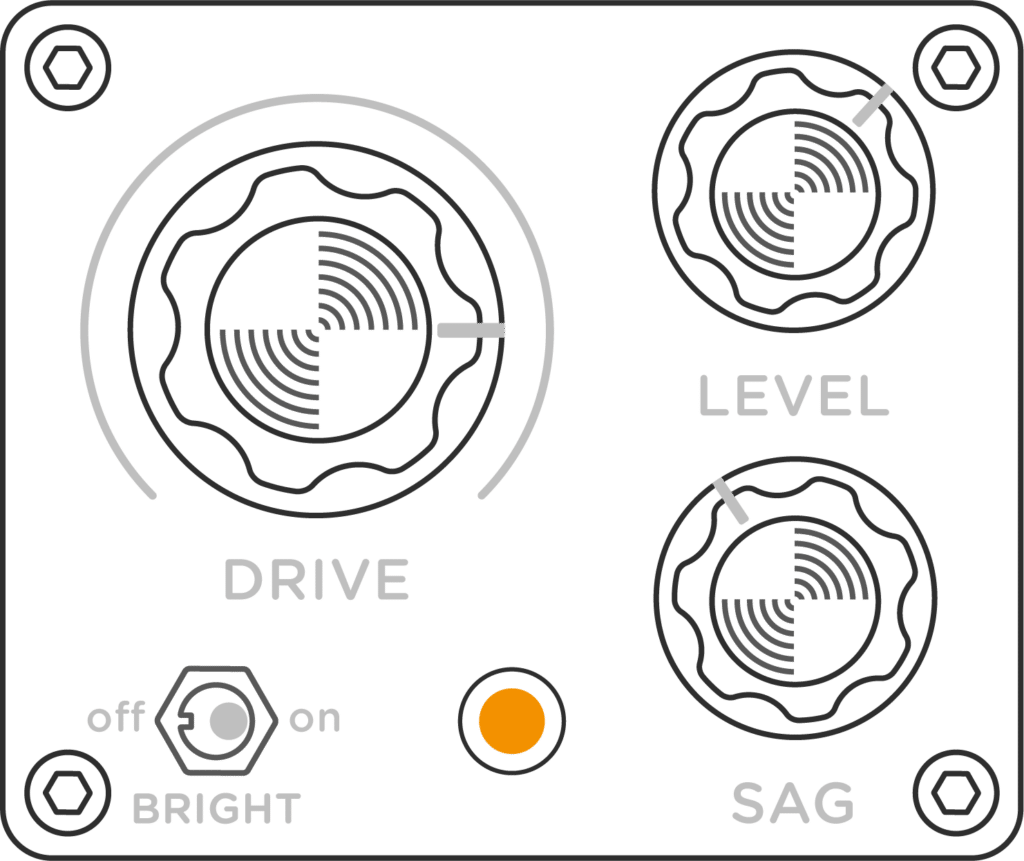
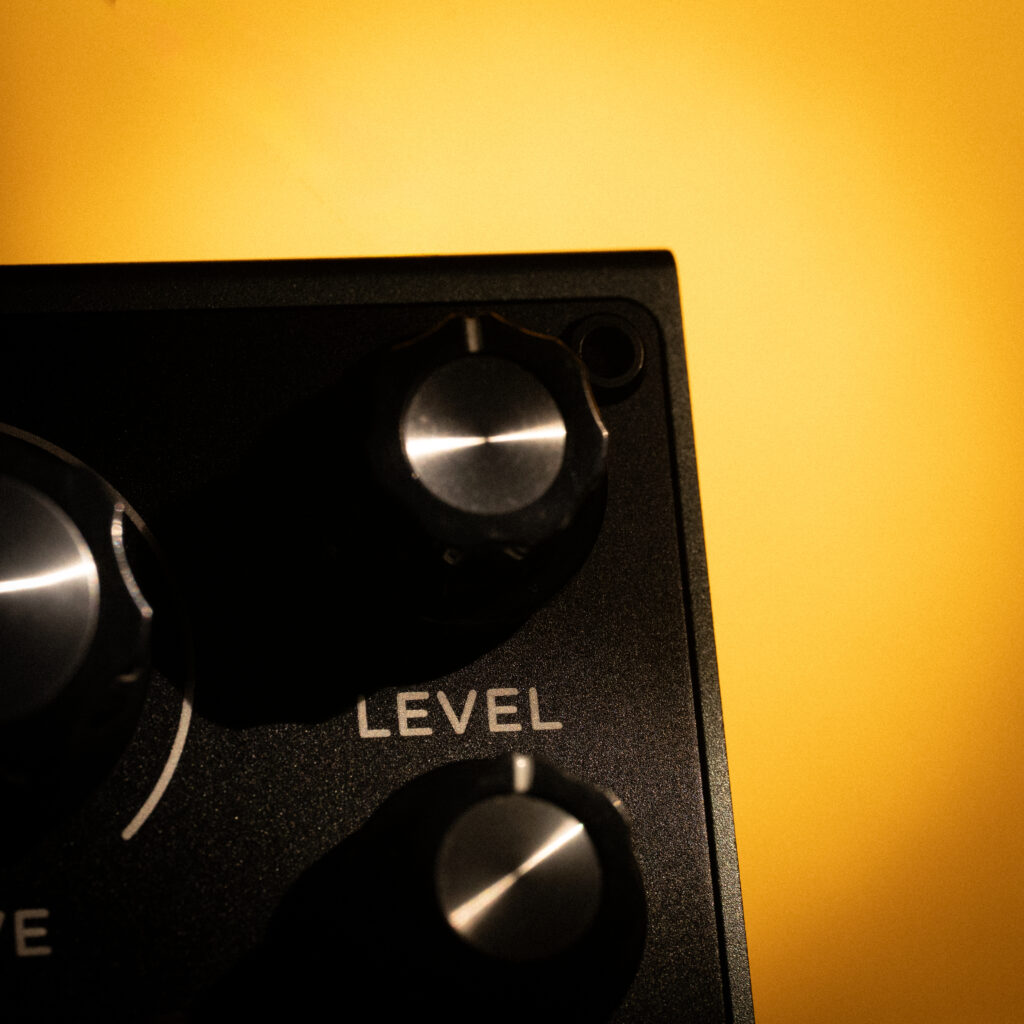
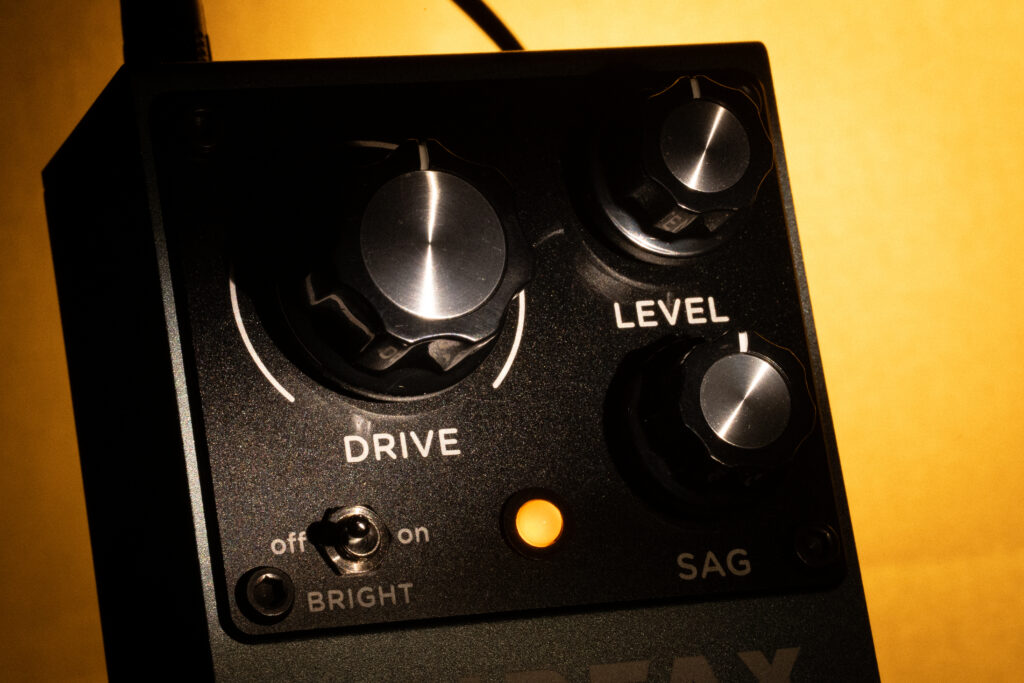
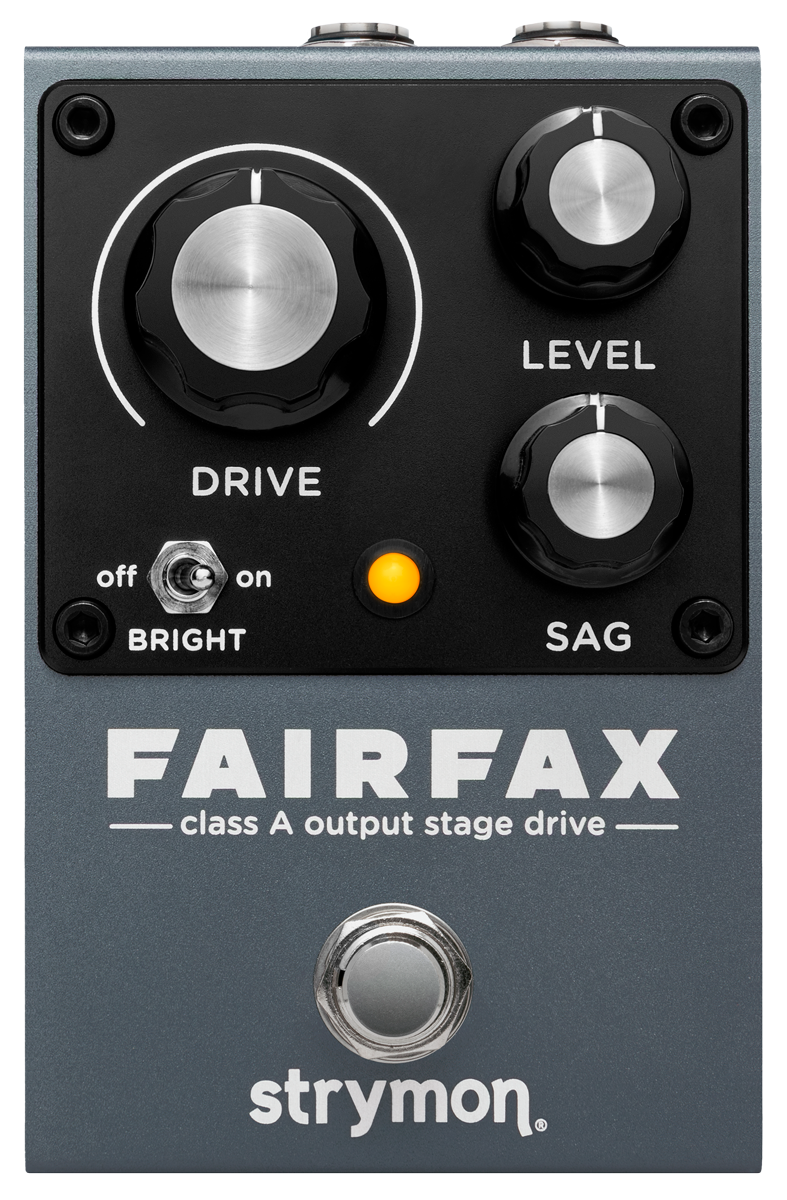
The Level Control sets the output level for the pedal. Lower settings send less total output signal to your amplifier, no matter where the other two knobs are set.
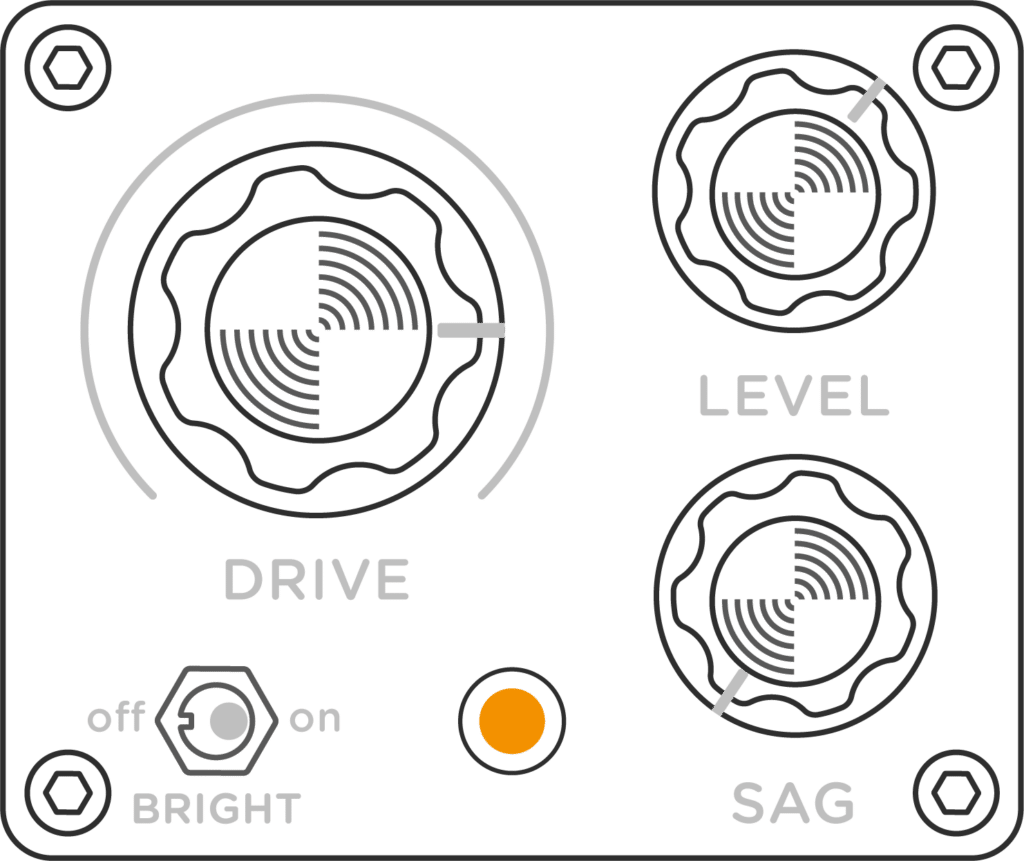
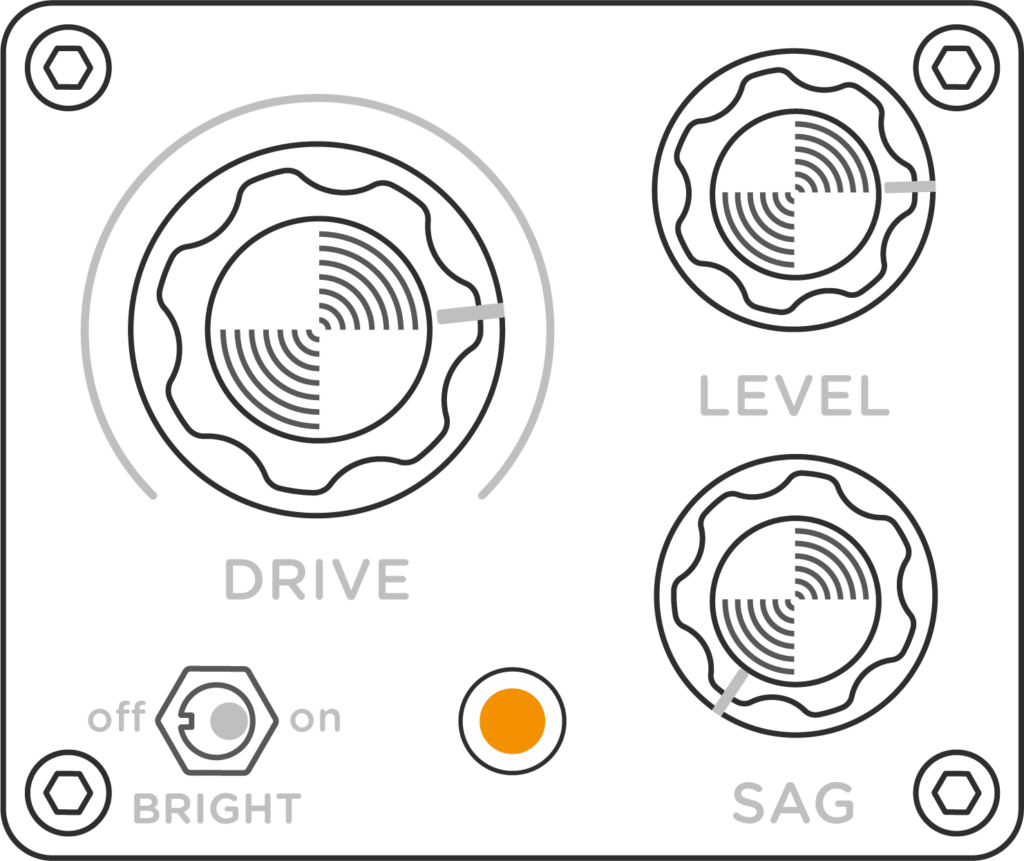
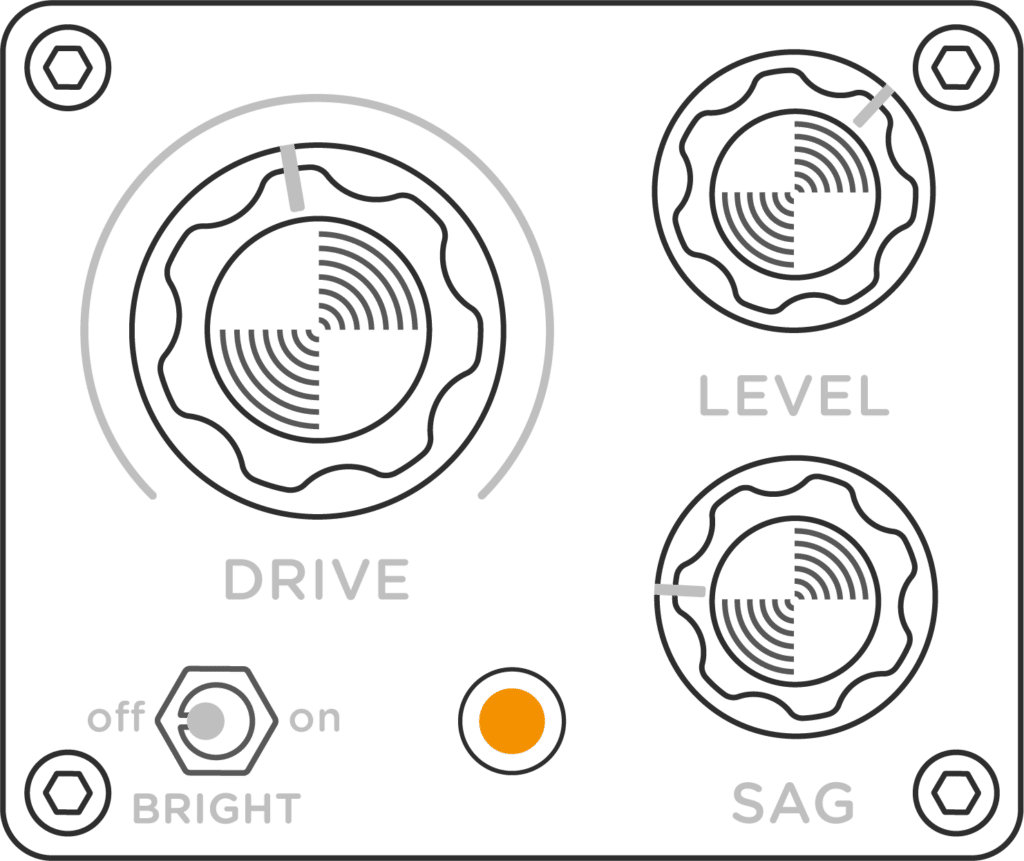
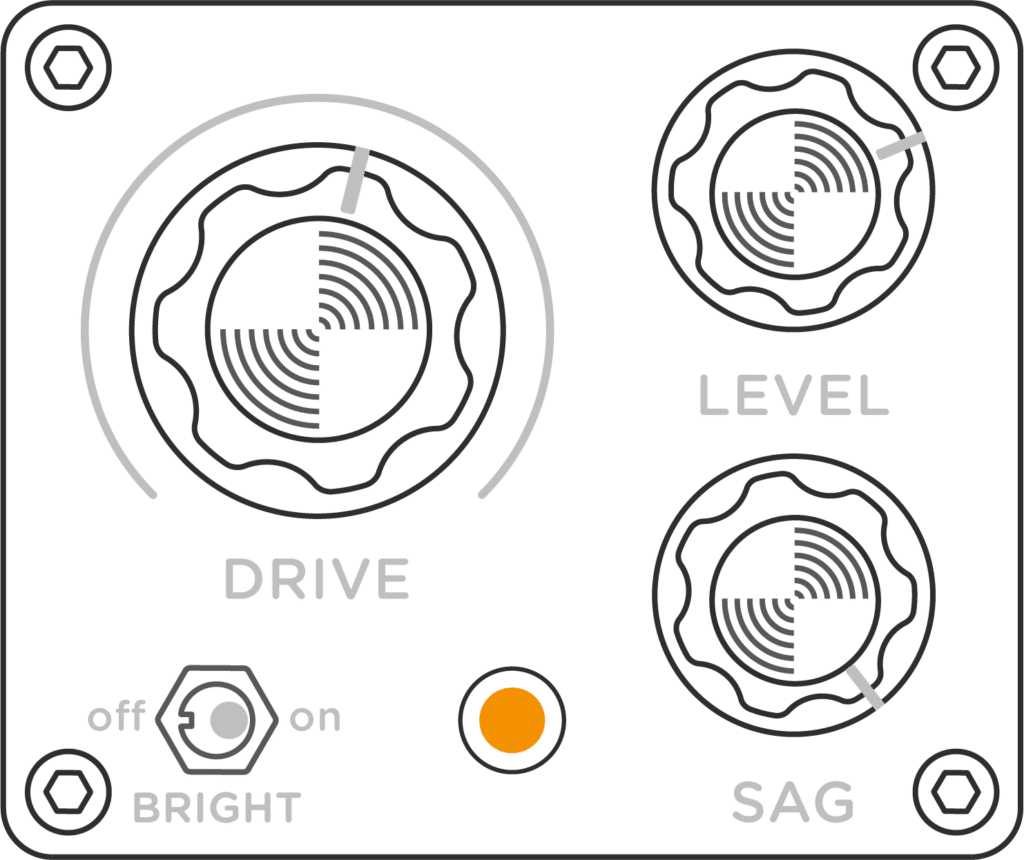
The Drive Control determines the amount of drive and saturation. Working in tandem with the Level control, you can determine precisely how you’d like to drive your amplifier — with a bunch of crunch and saturation dialed in, as a clean boost, or anything in between.
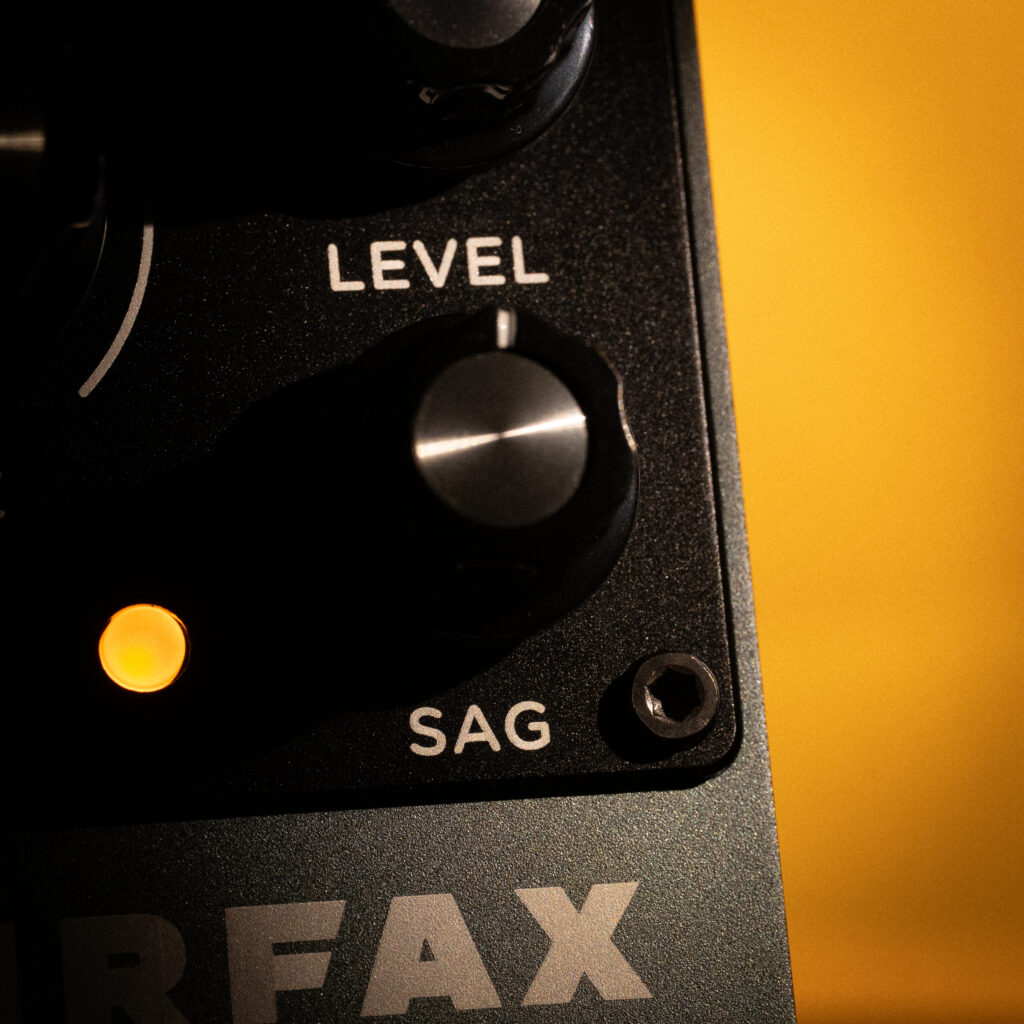
The variable Sag control allows you to fine-tune the behavior of the Sag circuit, where the amount of Sag is dependent on both the level being sent to the power amp section and on your playing style. At max, the sound can chortle and sputter, and the effect is more or less apparent depending on the Drive and Level settings.
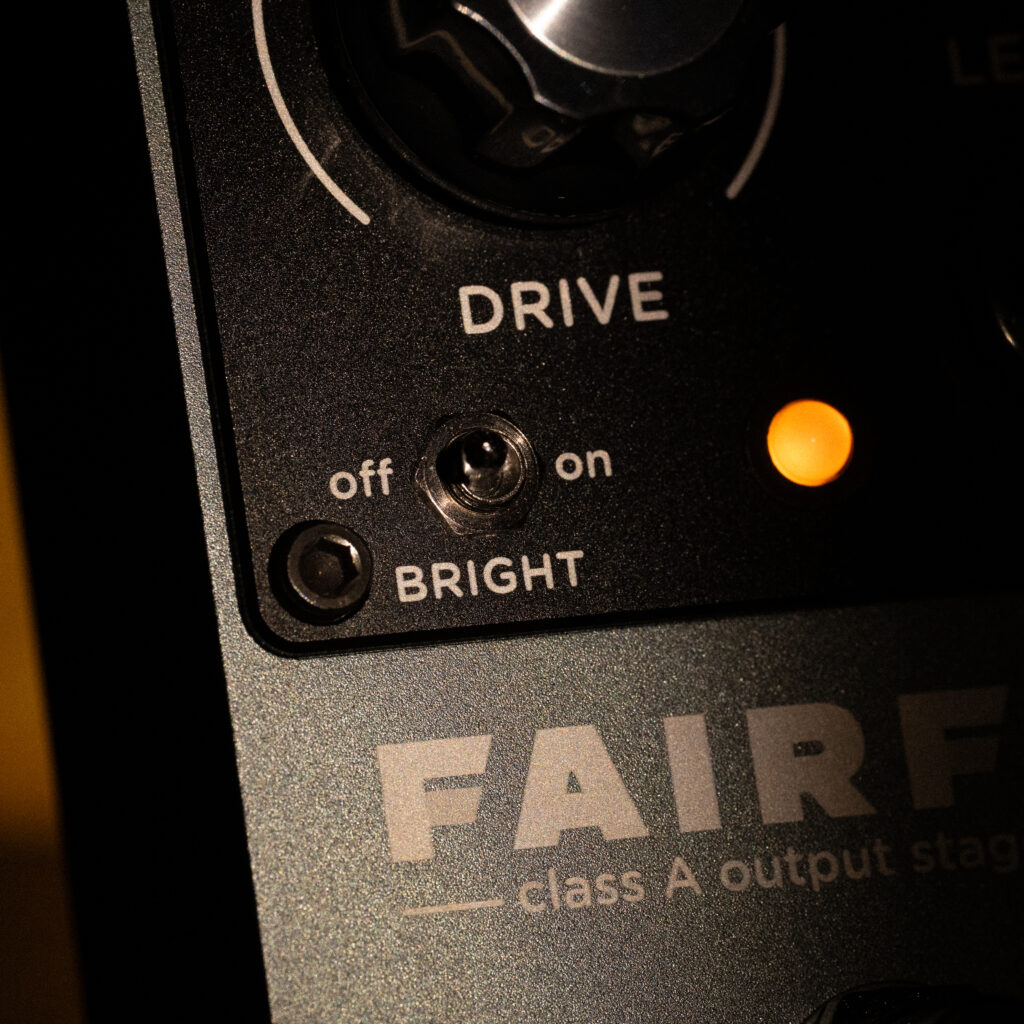
The Bright switch determines the high frequency contour. With the switch set to ‘Off’ high frequencies are attenuated somewhat, smoothing out the frequency response. Set to ‘On’, the high frequencies are left untouched, giving you a brighter response with more treble.
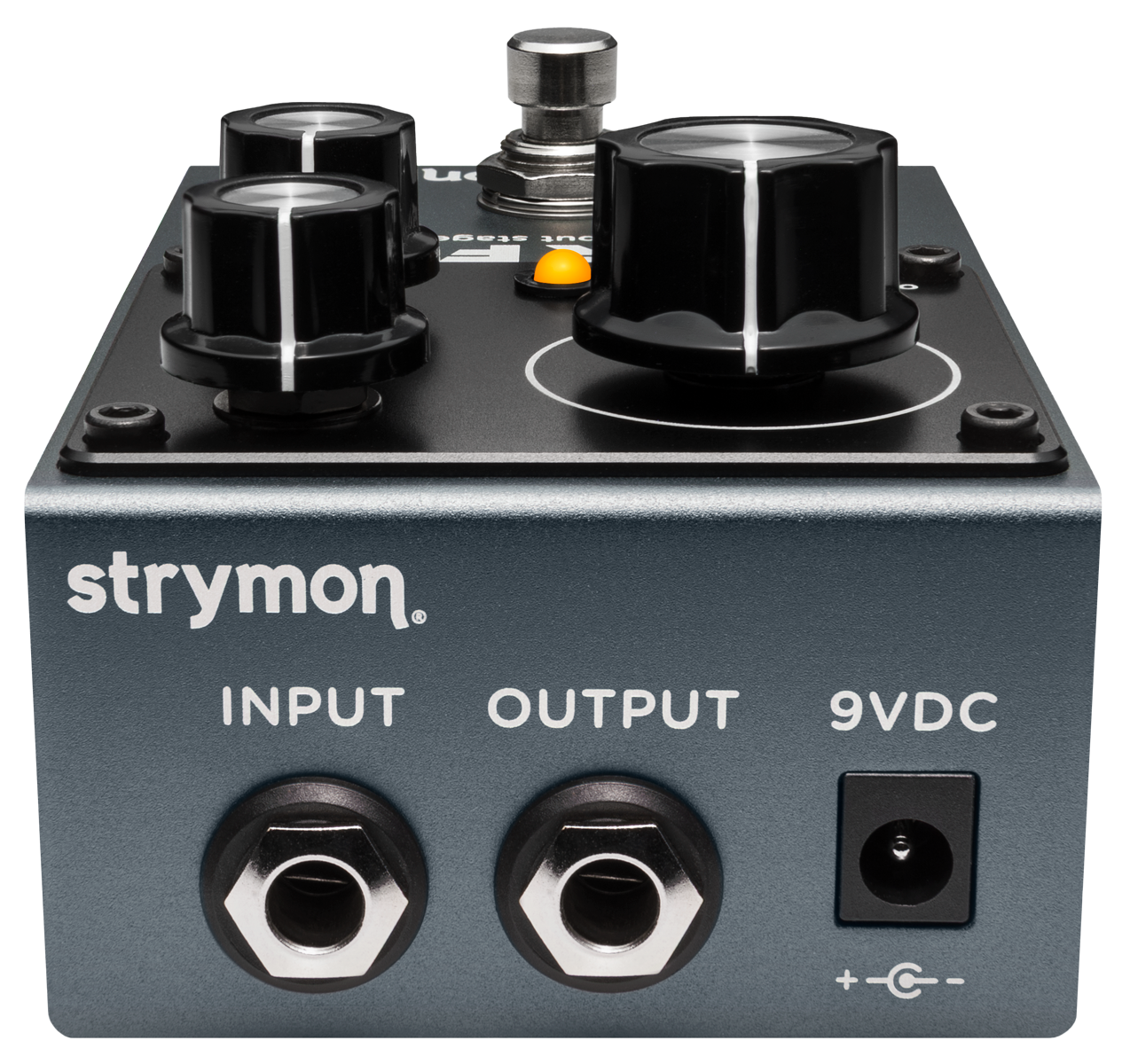
Use the interactive dots (+) to learn more about Fairfax’s knobs, switches, and inputs/outputs.
DRIVE
Discrete tube emulation circuit
provides smooth asymmetric
clipping.
BRIGHT
Tone switch for adjusting the high frequency content through the preamp.
off: cuts high frequencies to darken the tone.

on: provides flat, full frequency response.

LEVEL
Adjusts the output level when the pedal is engaged.
SAG
Turning clockwise increases amount of power rail sag. Fully counterclockwise, no sag is applied. At high levels of sag, the preamp starts to un-bias itself, leading to gating & sputtering.
A higher DRIVE setting will sag the circuit more than a lower setting with same input level.
FOOTSWITCH
Engages and bypasses the pedal. A lit AMBER LED indicates the pedal is engaged. Bypass is True bypass.
INPUT
High impedance JFET buffered mono instrument input.
OUTPUT
Low impedance mono output.
9VDC
Use a power supply or an adapter with the following rating: 9VDC, center negative, 500mA minimum (sold separately).
IMPORTANT! Voltages higher than 9VDC can damage the pedal.